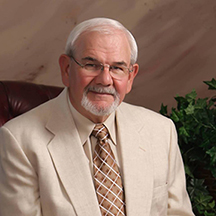
Rev. Don Campbell
THOUGHT FOR TODAY, JANUARY 20, 2019: LIKE FATHER, LIKE SON [Gen 25-26]
According to Dictionary.com, “This ancient proverb has been stated in English in slightly varying versions since the 1300s.” Abimelech could have uttered these words with great accuracy. Abraham who got into trouble passing Sarah off as his sister in Egypt (Gen 12:10-20), repeated the lie to Abimelech, king of Gerar (Gen 20:1-18).
Time marches on Isaac settles in Gerar with his beautiful wife Rebecca. Fearing not for her safety, but his own, he tells the men of Gerar that she is his sister. We pick up the story in Genesis 26:6-11: “So Isaac settled in Gerar. When the men of the place asked him about his wife, he said, ‘She is my sister,’ for he feared to say, ‘My wife,’ thinking, ‘lest the men of the place should kill me because of Rebekah,’ because she was attractive in appearance. When he had been there a long time, Abimelech king of the Philistines looked out of a window and saw Isaac laughing with Rebekah his wife. So Abimelech called Isaac and said, ‘Behold, she is your wife. How then could you say, “She is my sister’?” Isaac said to him, ‘Because I thought, “Lest I die because of her.”’ Abimelech said, ‘What is this you have done to us? One of the people might easily have lain with your wife, and you would have brought guilt upon us.’ So Abimelech warned all the people, saying, ‘Whoever touches this man or his wife shall surely be put to death.’”
Had Isaac been told the story of how his father had twice jeopardized the purity of his mother by trying to pass her off as his sister? If so, he probably heard it from his mother, not his father. Perhaps she confided in him privately. Perhaps Abraham’s weakness was a constant topic of discussion at the dinner table. Maybe her lips were sealed, and he had not heard the story at all. If the story had been told to him with appropriate warnings, like father, like son might not have applied to him.
In spite of all the maybes, there are three things of which we can be sure: All of the Bible heroes had flaws. God did not try to hide those flaws. God uses flawed people.
It is only when we accept our flaws and those of others that we truly find self-acceptance, which leads to acceptance of others. “Therefore, accept each other just as Christ has accepted you so that God will be given glory” (Rom 15:7, NLT).
CONNECTIONS
1. Are there some flaws/mistakes/sins that we should share with our children at an appropriate age in order to teach them how to avoid becoming like father, like son or like-mother-like daughter? What should we do before we decide to share? (Jam 1:5-8)
2. If we wait to confess our sins to our children until we are on our deathbed, should we take our guilty feelings to the grave instead of offloading them on to our children?
