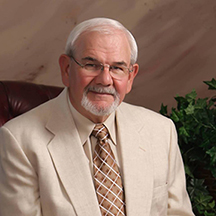
Rev. Don Campbell
THOUGHT FOR TODAY, JANUARY 29, 2019: PRIESTS AND PATRIARCHS [Gen 46-47]
The history of the world is often divided into three time periods labeled The Patriarchal Age, the Jewish Age, and the Christian Age. The Patriarchal Age is also referred to as “the father-rule age,” meaning that the father of each clan was the king and priest of the clan. Abraham offered sacrifices to God (Gen 22:13). Jacob offered sacrifices (Gen 31:54). It is implied that Isaac did the same (Gen 46:1). There was no order of priest that stood between these fathers and God, but that does not mean that there were no priests. The most important priest insofar as sacred history is concerned was Melchizedek who was king of Salem and priest of God. He blessed Abraham and Abraham gave him a tenth of everything (Gen 14:17-20). We have no record of any other priest of God during the period from Abraham through the death of Joseph, but that silence does not prove that none existed.
Some priests, of course, were not approved by God. Joseph married the daughter of Potiphera priest of On (Gen 41:45) The priests in Egypt had their own territory (Gen 47:20-26). We have two choices regarding these priests. They were totally the idea of man. They were a corruption of the worship of the one true God. Paul suggests that the worship of many gods is a corruption of the worship of the one true God (Rom 1:18-32), so it is logical that the priesthoods of the gods are corruptions of God’s approved priests, such as Melchizedek.
An uninspired writer wrote of this period that it begins with Creation, recorded in Gen. 1, and continues until the giving of the Ten Commandments recorded in Exodus 20. As we have seen, this is not accurate.
“This is all ancient history, so what difference does it make to us today?” one might ask. As Paul might say, “Much in every way.” If a builder gets one critical measurement wrong, all other measurements are off. From God’s promise to Abraham on, the Bible is about Abraham’s descendants, both physical and spiritual, so they are the focus. However, this does not mean that no one other than the Jewish patriarchs worshipped acceptably or that God blessed only their descendants. Melchizedek is proof that he did so during Abraham’s day. Jesus’ words are proof that he did so even after the giving of the covenant a Sinai: “But in truth, I tell you, there were many widows in Israel in the days of Elijah, when the heavens were shut up three years and six months, and a great famine came over all the land, and Elijah was sent to none of them but only to Zarephath, in the land of Sidon, to a woman who was a widow. And there were many lepers in Israel in the time of the prophet Elisha, and none of them was cleansed, but only Naaman the Syrian” (Lk 4:25-27).
The “take away” from all of this is in God’s own words: “‘I will have mercy on whom I have mercy, and I will have compassion on whom I have compassion.’ So then it depends not on human will or exertion, but on God, who has mercy (Rom 9:15-16).
CONNECTIONS
1. We must preach salvation on the terms God has given. If God should save someone apart from those conditions, do we have reason to complain? (Matt 20:15).
2. God commissioned Jonah to preach to the people of Nineveh of coming judgment, saying, “Yet forty days, and Nineveh shall be overthrown” (3:4). They turned from their evil way and God relented of the disaster he had said he would do to them (3:10). Jonah got mad. Have you ever heard a preacher who told people they were going to hell and he seemed glad of it? How did it make you feel?
