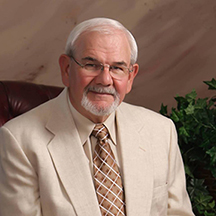
Rev. Don Campbell
Leviticus 22-23
THOUGHT FOR TODAY, FEBRUARY 20, 2019
FEASTING AND FASTING
Seven “holy days” are given in chapter 23. Some of them were one day events and others lasted for seven days. Only one of these was a fast day; all others were feast days. The word “fast” itself is not used by Moses, but it is used in the historical books and in the prophets. Fasting is mentioned frequently in the gospels and three times in (Acts 13:2-3; 14:23; 27:9). These are narrative accounts, not instructional. Nothing is said in any of the epistles about fasting, showing clearly that fasting is no part of the apostles’ doctrine.
This does not mean that a person cannot choose to fast for spiritual reasons. However, Jesus tells us how it should be done if we so choose: “And when you fast, do not look gloomy like the hypocrites, for they disfigure their faces that their fasting may be seen by others. Truly, I say to you, they have received their reward. But when you fast, anoint your head and wash your face, that your fasting may not be seen by others but by your Father who is in secret. And your Father who sees in secret will reward you” (Matthew 6:16-18).
There is, however, a fast that is the same across both covenants. The Israelites were complaining that they had fasted and humbled themselves and God took no notice of them. God responds: “Behold, in the day of your fast you seek your own pleasure, and oppress all your workers. Behold, you fast only to quarrel and to fight and to hit with a wicked fist. Fasting like yours this day will not make your voice to be heard on high. Is such the fast that I choose, a day for a person to humble himself? Is it to bow down his head like a reed, and to spread sackcloth and ashes under him? Will you call this a fast, and a day acceptable to the Lord? ‘Is not this the fast that I choose: to loose the bonds of wickedness, to undo the straps of the yoke, to let the oppressed go free, and to break every yoke?’” (Isaiah 58:3-6).
Jesus taught that fasting was the natural product of grief: “Then the disciples of John came to him, saying, ‘Why do we and the Pharisees fast, but your disciples do not fast?’ And Jesus said to them, ‘Can the wedding guests mourn as long as the bridegroom is with them? The days will come when the bridegroom is taken away from them, and then they will fast. No one puts a piece of unshrunk cloth on an old garment, for the patch tears away from the garment, and a worse tear is made. Neither is new wine put into old wineskins. If it is, the skins burst and the wine is spilled and the skins are destroyed. But new wine is put into fresh wineskins, and so both are preserved’” (Matthew 9:14-17). The bridegroom was taken away and crucified, giving himself up for his bride to sanctify and cleanse her (Ephesians 5:25-27). He is now risen and sits at the right hand of the Father.
We are called to feast, not fast: “Cleanse out the old leaven that you may be a new lump, as you really are unleavened. For Christ, our Passover lamb, has been sacrificed. Let us therefore celebrate the festival, not with the old leaven, the leaven of malice and evil, but with the unleavened bread of sincerity and truth” (1 Corinthians:7-8).
CONNECTIONS 2 Samuel 12:16-17/20-23 – 1 Thessalonians 4:12-14/18
1. David is an example of grief leading naturally to fasting. When God afflicted the child conceived in adultery with Bathsheba, “David therefore sought God on behalf of the child. And David fasted and went in and lay all night on the ground. And the elders of his house stood beside him, to raise him from the ground, but he would not, nor did he eat food with them” (2 Samuel 12:16-17). When the child died the first thing David did was washed and anointed himself, changed his clothes and went into the house of the Lord and worshiped (v.20). This puzzled his servants, but David explained: “While the child was still alive, I fasted and wept, for I said, ‘Who knows whether the Lord will be gracious to me, that the child may live?’ But now he is dead. Why should I fast? Can I bring him back again? I shall go to him, but he will not return to me’” (vv.22-23). To not grieve at the death of a loved one would be a denial of the relationship of love, but this grief gives way to hope for believers: “But we do not want you to be uninformed, brothers, about those who are asleep, that you may not grieve as others do who have no hope. For since we believe that Jesus died and rose again, even so, through Jesus, God will bring with him those who have fallen asleep” (1 Thessalonians 4:12-14). In light of this, what does Paul tell us to do? (v.18).
2. I remember Grady Reese, who was a great elder at the 81st Avenue Church of Christ in Westminster, CO and a great friend comforting me with these words nearly 40 years ago: “Each time a loved one dies in Christ, heaven becomes more precious.” As David said, they cannot come to us, but we can go to them. What words of comfort have you received in times of grief?
