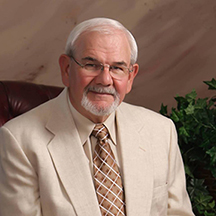
Rev. Don Campbell
Judges 10-12
THOUGHT FOR TODAY, April 3, 2019
“GOD CHOOSES THE UNLIKELY TO DO THE UNBELIEVABLE”
Like many young men of our day, Jephthah had received the short end of the stick. He seems to have been the oldest son of Gilead and an unnamed prostitute. Gilead’s wife also bore him sons, and when they grew up, they drove him away from home. Like many young men, he looked for a family wherever he could find one. He found it in gang members, whom the text describes as “worthless fellows” (Judges 11:3).
Time went by and the Ammonites made war with Israel. Jephthah had established himself as a mighty warrior and the elders of Gilead came to him wanting him to use his skills to fight for them. They offered him whom they had kicked out of his home the headship over all the inhabitants of Gilead (v.8). He agrees but makes it clear that his not the skills he had honed running with worthless men, but God who would give the victory (v.9). His name is in the honor roll of faith along with others who “through faith conquered kingdoms, enforced justice, obtained promises (Hebrews 11:33).
We don’t know much about God’s call of the first two judges other than the first was Caleb’s little brother, the second was a lefty name Ehud, and the third Shamgar “who killed 600 of the Philistines with an oxgoad.” He then calls a woman to do a man’s job, devoting two entire chapters to her victories. He called a reluctant farmer who was hiding in a winepress in order to save some of the wheat harvest which he was threshing. Then he called an outcast to judge Israel.
God often chooses the unlikely to do the unbelievable.
He gave the key of the kingdom to a fisherman. He called a radical, ultra-conservative Jew to be the apostle to the Gentiles. He Marshal Keeble, called a man with a seventh-grade education and son of a former slave to establish over 200 black churches of Christ and baptize as many as 30,000 people. Keeble did more than preach. He mentored another generation of Black preachers by always taking with him his “preacher boys” who would deliver a brief message before Keeble would preach. An article in the Christian Chronicle (April 3, 2018) bore the title “Marshall Keeble’s ‘boy preachers’ still baptizing and saving souls.”
Among Keeble’s “preacher boys” are the founder of the National Crusade for Christ, a president of a university, and the lawyer who represented Rosa Parks. Born to a former slave 13 years after the Civil War, having reached only the seventh grade in school, and working in a very racist South, Keeble’s legacy lives on.
CONNECTION
1. God has used men and women to accomplish his work, people known only to a few while they lived and are remembered by fewer now that they have passed on to their reward. Do you know such a person? Pause and thank God for them.
2. When a small band of Israelites returned to the homeland after 70 years of bondage, Zerubbabel was tasked with rebuilding the temple which was only a shadow of the temple Solomon had built. Some viewed it with contempt, resulting in the following: “Do not despise these small beginnings, for the Lord rejoices to see the work begin’ (Zechariah 4:10).
I once heard a well-known preacher who preached for a congregation that was about 20 times the size of the average church of Christ. He spoke despairingly of those “little cracker-box church buildings on the other side of the tracks.” Many of those cracker-box churches are still faithful. After the preacher’s death, his church was plagued with infighting and division. Eventually it abandoned its identity as a church of Christ. What happens to many churches, regardless of denominational affiliation, that become caught in making a name for themselves?
