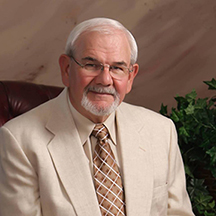
Rev. Don Campbell
Ruth 1-4
THOUGHT FOR TODAY, April 7, 2019
“WHEREVER YOU GO, THERE YOU ARE”
The Bible does not reveal whether it was God’s decision or Abraham’s for him to go down into Egypt when famine hit the Promised Land, but he went and found himself in deep trouble (Genesis 12:10-20). Abraham’s problem was not Egypt, nor Pharaoh, but Abraham who tried to pass his wife off as his sister because he lacked faith that God would protect him.
Famines were frequent in the Promised Land, so let’s fast forward to the period of the Judges and another famine in the land (Ruth 1:1-5). The moral state of society is summed up in Judges 21:25: “In those days there was no king in Israel. Everyone did what was right in his own eyes.” Elimelech, however, was not fleeing the moral decay because he moved to a cesspool of idolatry (Psalms 60:8; 108:9).
Elimelech only planned to sojourn in Moab (v.1), but Moab became their permanent residence (v.3). As one writer put it: “Elimelech traded a famine in Bethlehem for three graves in Moab. He got what he wanted, but he lost what he had” [Expository Pulpit Series – Ruth: Romance and Redemption].
Believers are sojourners in this world of sin (1 Pet 2:11-12). The other option is to get out of the world (1 Corinthians 5:9-10). Problems arise when we allow the world to get into us.
So long as we are in the world, we are to be salt and light, but there are some places where we are more apt to lose our saltiness and extinguish our light than in others. Can one be a Hollywood actor, a professional ballplayer, a fashion model or a politician and be faithful? Can a Christian, including preachers, sojourn in the land of secular higher education and not lose faith? Perhaps. However, many of us could share sad stories of those whose faith was made shipwreck by all these pursuits (1 Timothy 1:18-20).
Sojourning in the world is not our problem; our response to the call of the world is our problem (1 John 2:15-17). Abraham’s problem wasn’t Pharaoh, but his lack of truthfulness and courage, which jeopardized his wife’s purity. Elimelech’s problem wasn’t a famine, but his leaving God’s promise and protection to sojourn among idolaters. Other landowners stayed and survived the famine, but Abimelech chose to go into Moab, removing his family from any godly influence that did remain in Israel. Higher education was not the problem for those who lost their faith pursuing academic degrees, because many obtained their advanced degrees and used them to be more effective servants of God.
Sometimes we need to get out of our land and away from our families but remember that we cannot run from our problems and wherever we go, there we are. If the problem is us, a change of address will not help and may hurt.
CONNECTIONS
1. Amos wrote, “Behold, the days are coming,” declares the Lord God, “when I will send a famine on the land—not a famine of bread, nor a thirst for water, but of hearing the words of the Lord. They shall wander from sea to sea, and from north to east; they shall run to and fro, to seek the word of the Lord, but they shall not find it” (Amos 8:11-12). Are many people running to and fro searching for meaning in life because they have rejected God’s word?
2. Augustine of Hippo said, “Thou hast made us for thyself, O Lord, and our heart is restless until it finds rest in thee.” What does Solomon say that is similar? (Ecclesiastes 3:11)
