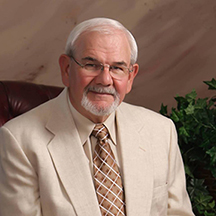
Rev. Don Campbell
Obadiah, Psalm 82-83
THOUGHT FOR TODAY, July 1, 2019
“THE KING OF KINGS ADDRESS THE KINGS”
The term “the day of the Lord” is used often in Scripture and points not to a single day in history, but to any day when God in his providence judges a nation or nations. Obadiah was prophesying against the descendants of Esau, known as Edom. But he had a message for all nations: “For the day of the Lord is near upon all the nations. As you have done, it shall be done to you; your deeds shall return on your own head” (1:15).
In God’s providence, he allows rulers to come to power in nations and nations to rise in power above other nations. Sometimes it is by his permissive will in which he simply allows things to take their course. Sometimes it is by his sovereign will in which he decrees that it happen. Sometimes the Bible tells us whether God’s providence or his sovereignty is at work. At other times it does not. In either situation, those who come to power must act in accordance with his will or pay the price for not doing so.
In Psalm 82, Asaph describes a scene that cannot be seen with the natural eye: “God has taken his place in the divine council; in the midst of the gods he holds judgment: ‘How long will you judge unjustly and show partiality to the wicked?’” (v.1). Knight has described the scene: “Such a picture, though strange to us, would have been fully understandable to the people of those days. For they knew that the great overlords of the east, whether Assyrians in Isaiah’s day, or neo-Babylonians in Jeremiah’s day called themselves King of kings, and Lord of lords. All the lesser kings of the small nations therefore had to sit in council (in imagination!) under the Great King (Isaiah 34:6) and learn what their duties were as subordinates. But here it is the Judge of the earth, the Mighty Lord, the Most High God, who take the chair” (“The Daily Bible Study: Psalms, vol 2; The Westminster Press). [Artaxerxes uses this language to refer to himself (Ezra 7:12). Ezekiel and Daniel use it to refer to Nebuchadnezzar (Ezekiel 26:7; Daniel 2:37).]
Here is the Message of the true King of King and Lord of Lords to these “gods”: “How long will you judge unjustly and show partiality to the wicked? Give justice to the weak and the fatherless; maintain the right of the afflicted and the destitute. Rescue the weak and the needy; deliver them from the hand of the wicked” (Psalms 82:2-4).
Knight may have it right when he said, “Our psalmist answers the question, not, ‘Who is God?’, but ‘What is God for?’, by revealing that he is the God of the underdog and of the suffering masses of humanity, that in fact he is the God (as we would say today) of social justice.”
The suffering masses can be saved eternally without ever experiencing social justice, but those in power who denied them social justice will someday be brought to justice by the King himself: “From his mouth comes a sharp sword with which to strike down the nations, and he will rule them with a rod of iron. He will tread the winepress of the fury of the wrath of God the Almighty. On his robe and on his thigh he has a name written, King of kings and Lord of lords” (Revelations 19:15-16).
CONNECTIONS
1. Many denigrate the idea of God being a God who demands social justice, calling this the “social gospel.” I find it quite telling that these are the ones who usually are enjoying social advantage. What are your thoughts?
2. Social justice in the Bible is not social equality, as there will always be the have’s and the have-not’s, but does this fact of life excuse the have’s? What did Paul say to the have’s in the church? (1 Timothy 6:17-19).
