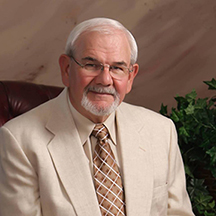
Rev. Don Campbell
Jeremiah 18-22
THOUGHT FOR TODAY, August 12, 2019
“THE POTTER AND THE CLAY”
God told Jeremiah to go down to the potter’s house and observe that when the vessel in the potter’s hand was spoiled, the potter did not throw the clay away, but made another vessel as the potter saw fit. The word of the Lord came to Jeremiah telling him that Israel was like clay in his hands. As Andrews W. Blackwood, Jr. said, “The obvious meaning of the figure is divine sovereignty. Unhappily, many theologians have interpreted it to mean divine arbitrariness, which is the exact opposite of Jeremiah’s conclusion” (Commentary on Jeremiah. P. 152).
Notice the three “if’s” of 18:7-10: “IF at any time I declare concerning a nation or a kingdom, that I will pluck up and break down and destroy it, and IF that nation, concerning which I have spoken, turns from its evil, I will relent of the disaster that I intended to do to it. And IF at any time I declare concerning a nation or a kingdom that I will build and plant it, and if it does evil in my sight, not listening to my voice, then I will relent of the good that I had intended to do to it.”
According to the Cambridge English Dictionary, the conjunction “if” is “used to say that a particular thing can or will happen when, only when, or after something else happens or becomes true.” God’s promises to bless or destroy are connected to man’s free will. “If it turns from its evil, I will relent.” “If it does evil, then I will relent of the good I intended to do to it.”
From the beginning, God’s calling Israel into a covenant relationship with him, his if-then dictum has been in effect: “‘Now therefore, if you will indeed obey my voice and keep my covenant, you shall be my treasured possession among all peoples, for all the earth is mine; and you shall be to me a kingdom of priests and a holy nation.’ These are the words that you shall speak to the people of Israel” (Exodus 19:5-6).
In Samuel’s farewell address to the nation after Saul had been appointed king, we see the same conditional statement: “And now behold the king whom you have chosen, for whom you have asked; behold, the Lord has set a king over you. If you will fear the Lord and serve him and obey his voice and not rebel against the commandment of the Lord, and if both you and the king who reigns over you will follow the Lord your God, it will be well. But if you will not obey the voice of the Lord, but rebel against the commandment of the Lord, then the hand of the Lord will be against you and your king” (1 Samuel 12:13-15).
The same pattern is seen when Solomon was building the temple: “Concerning this house that you are building, if you will walk in my statutes and obey my rules and keep all my commandments and walk in them, then I will establish my word with you, which I spoke to David your father. And I will dwell among the children of Israel and will not forsake my people Israel” (1 Kings 6:11-13). In his prayer of dedication of the temple, Solomon clarifies that God’s choosing Israel as a nation of priests and kings was not for their honor but God’s honor and to serve as a bridge from the nations to him: “In the future, foreigners who do not belong to your people Israel will hear of you. They will come from distant lands because of your name, for they will hear of your great name and your strong hand and your powerful arm. And when they pray toward this Temple, then hear from heaven where you live, and grant what they ask of you. In this way, all the people of the earth will come to know and fear you, just as your own people Israel do. They, too, will know that this Temple I have built honors your name” (1 Kings 8:41-43, NLT). As priests and kings, they had failed miserably: “Has this house, which is called by my name, become a den of robbers in your eyes? Behold, I myself have seen it, declares the Lord” (Jeremiah 7:11).
Jesus has the final word: “Therefore say I unto you, ‘The kingdom of God shall be taken from you, and given to a nation bringing forth the fruits thereof’” (Matthew 21:43). Peter identifies this nation: “But you are a chosen race, a royal priesthood, a holy nation, a people for his own possession, that you may proclaim the excellencies of him who called you out of darkness into his marvelous light” (1 Peter 2:9).
God endured with much patience vessels of wrath prepared for destruction (physical Israel) so that he might have mercy on the spiritual seed: “In Christ Jesus you are all sons of God, through faith. For as many of you as were baptized into Christ have put on Christ. There is neither Jew nor Greek, there is neither slave nor free, there is no male and female, for you are all one in Christ Jesus. And if you are Christ’s, then you are Abraham’s offspring, heirs according to promise” (Galatians 3:27-29).
CONNECTIONS
1. Sometimes the “then” if the if-then relationship is not verbalized, but implied: “For if we have been united with him in a death like his, we shall certainly be united with him in a resurrection like his” (Romans 6:5). How are we united with the death of Christ? (Romans 6:1-6)
2. When God took the kingdom away from fleshly Israel, did he take salvation away from individual Jews? For the answer, see(Romans 11:23).
