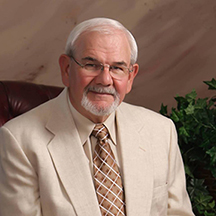
Rev. Don Campbell
Jeremiah 26-29
THOUGHT FOR TODAY, August 14, 2019
“BLOOMING WHERE WE ARE PLANTED”
God instructed Jeremiah to make a wooden yoke and wear it around his neck to symbolize God’s will that not only Judah, but surrounding nations submit to the yoke of Babylon. God had the right to require this of the nations because he created the world and all that is in it and gave kingdoms to whomever he wished (27:1-5). Those who would not willingly submit would be subjugated. Those who submitted would be allowed to remain in their own land (27:11). This would not be forever, but for 70 years (29:10).
A false prophet named Hananiah claimed a message from the Lord which was that within two years the yoke of Nebuchadnezzar would be broken and all exiles returned to Jerusalem (28:3-4). He broke the wooden yoke which Jeremiah was wearing, symbolizing that his two-year time was from the Lord. God sent Jeremiah to Hananiah with a message: “Go and tell Hananiah, ‘This is what the Lord says: You have broken a wooden yoke, but you have replaced it with a yoke of iron. The Lord of Heaven’s Armies, the God of Israel, says: I have put a yoke of iron on the necks of all these nations, forcing them into slavery under King Nebuchadnezzar of Babylon. I have put everything, even the wild animals, under his control.’ Then Jeremiah the prophet said to Hananiah, ‘Listen, Hananiah! The Lord has not sent you, but the people believe your lies. Therefore, this is what the Lord says: “You must die. Your life will end this very year because you have rebelled against the Lord.”’ Two months later the prophet Hananiah died” (28:13-17).
God had made his point, and the message to Israel was: “Build houses and live in them; plant gardens and eat their produce. Take wives and have sons and daughters; take wives for your sons, and give your daughters in marriage, that they may bear sons and daughters; multiply there, and do not decrease. But seek the welfare of the city where I have sent you into exile, and pray to the Lord on its behalf, for in its welfare you will find your welfare” (29:5-7).
One cannot read this without remembering the words of Jesus: “You have heard that it was said, ‘You shall love your neighbor and hate your enemy.’ But I say to you, Love your enemies and pray for those who persecute you, so that you may be sons of your Father who is in heaven. For he makes his sun rise on the evil and on the good, and sends rain on the just and on the unjust. For if you love those who love you, what reward do you have? Do not even the tax collectors do the same? And if you greet only your brothers, what more are you doing than others? Do not even the Gentiles do the same? You therefore must be perfect, as your heavenly Father is perfect” (Matthew 5:43-47).
Following the execution of Stephen, a great persecution, headed by Saul of Tarsus, arose against the church in Jerusalem, causing many of the disciples to be scattered throughout Judea and Samaria. Those who were scattered went about preaching the word (Acts 8:1-4). Years later after Saul, the persecutor had become Paul the champion of Christianity, he was himself jailed in Rome where he spent two years preaching from prison (Acts 28:29-31). All these bloomed where they were planted.
CONNECTIONS
1. If we wait for ideal circumstances to do the work of the Lord, when will we do it?
2. Much is being said today about the persecution of Christians in America. While not denying that there are enemies to the cross, do some “Christians” create opposition because they violate Peter’s charge not to suffer as a result of meddling in other people’s matters? (1 Peter 4:12-16)
