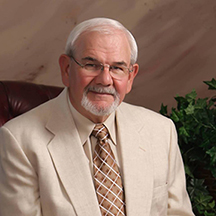
Rev. Don Campbell
Matthew 27, Mark 15
THOUGHT FOR TODAY, NOVEMBER 12, 2019
“THE DAY DARKNESS OVERSHADOWED THE EARTH”
“Now from the sixth hour there was darkness over all the land until the ninth hour. And about the ninth hour Jesus cried out with a loud voice, saying, “Eli, Eli, lema sabachthani?” that is, “My God, my God, why have you forsaken me?” (Matthew 27:45-46).
Some question whether God really forsook Christ, suggesting that it just seemed that way to Christ. If that were the case, the feeling of abandonment would have the same psychological effects as abandonment. However, I do not believe that is the case.
The cross did not take Christ by surprise. He knew it would be more than the same death the two thieves would also experience. “Now is my soul troubled. And what shall I say? ‘Father, save me from this hour’? But for this purpose I have come to this hour’” (John 12:27). “Then Jesus went with them to a place called Gethsemane, and he said to his disciples, ‘Sit here, while I go over there and pray.’ And taking with him Peter and the two sons of Zebedee, he began to be sorrowful and troubled. Then he said to them, ‘My soul is very sorrowful, even to death; remain here, and watch with me.’ And going a little farther he fell on his face and prayed, saying, ‘My Father, if it be possible, let this cup pass from me; nevertheless, not as I will, but as you will.’ (Matthew 26:36-39). Three times he prayed the same prayer. Luke supplies a detail not found in Mathew: “And there appeared to him an angel from heaven, strengthening him. And being in agony he prayed more earnestly; and his sweat became like great drops of blood falling down to the ground” (22:41-44).
God had heard him. Strengthened by the angel, a calm came over him: “Then he came to the disciples and said to them, ‘Sleep and take your rest later on. See, the hour is at hand, and the Son of Man is betrayed into the hands of sinners. Rise, let us be going; see, my betrayer is at hand’” (Matthew 26:45-46). He also heard his Father. He had to drink the cup. Peter explains: “When he was reviled, he did not revile in return; when he suffered, he did not threaten, but continued entrusting himself to him who judges justly. He himself bore our sins in his body on the tree, that we might die to sin and live to righteousness. By his wounds you have been healed. For you were straying like sheep, but have now returned to the Shepherd and Overseer of your souls.” (1 Peter 2:23-25).
On the cross, God could not hold his Son’s hand, as it were, as he crossed the chilly waters of death. The Father had to turn his back on that awful scene as his beloved Son had to drink the cup. Otherwise, Satan won: “Since therefore the children share in flesh and blood, he himself likewise partook of the same things, that through death he might destroy the one who has the power of death, that is, the devil, and deliver all those who through fear of death were subject to lifelong slavery. (Hebrews 2:14-15).
There is one passage that could be interpreted as negating all that I have said about God’s turning his back on Jesus. Psalm 22 is clearly a Messianic psalm, as Jesus’ words are the first words of that psalm, and in verse 24, we read, “For he has not despised or abhorred the affliction of the afflicted, and he has not hidden his face from him, but has heard, when he cried to him.” But God did not hear Jesus in the sense that he removed the cup with all its anguish. The solution is found in Hebrews 5:7-10: “In the days of his flesh, Jesus offered up prayers and supplications, with loud cries and tears, to him who was able to save him from death, and he was heard because of his reverence. Although he was a son, he learned obedience through what he suffered. And being made perfect, he became the source of eternal salvation to all who obey him, being designated by God a high priest after the order of Melchizedek.” There was only one time in Jesus’ exist in heaven and on earth when his will differed from his Fathers, and he accepted the Father’s will.
As we have never shared the glory of God as did Jesus (John 17:5), we are not acutely aware of our separation from God, as was Christ. Christ experienced something he had never experienced before. Sin which separates man from God was laid on him, and God hid his face from him (Isaiah 59:1-2). If we accept his sacrifice, we will never experience what he experienced. If we do not, we may cry out one second into eternity, “My God, my God, why have you forsaken me?” It will be too late. He will have turned his back on us and closed his ears to our cries.
CONNECTIONS
1. Do these truths about the sufferings of Christ put more meaning into the word “so” in John 3:16: “God so loved the world, that he gave his only Son”?
2. If we believe (with all that involves), one day we will share the glory Jesus had with the Father (John 17:5; 1 John 3:1-2). If we don’t believe, we will experience what he experienced when he cried out to the Father. For which are you preparing (1 John 2:3)?
