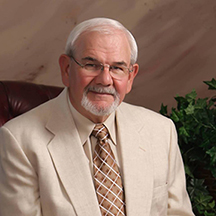
Rev. Don Campbell
Matthew 28; Mark 16
THOUGHT FOR TODAY, NOVEMBER 14, 2019
“THE GREAT COMMISSION IS LIMITED”
Only one aspect of the great commission is unlimited: “Go to all the world.” Jesus commission 11 to take the gospel to the entire world. He had appeared to over five hundred brothers after his resurrection and there were at least 120 disciples present when the Holy Spirit fell upon them in Acts two. He had a larger pool from which he could have drawn, and before the mission began, Matthias was added to the number, bringing it once again to 12.
The apostolic commission must be extended but at the risk of being branded a heretic, “Go ye” does not mean “Go me.” Jesus commissioned Paul, Paul commissioned Timothy, and Timothy was to commission faithful men: “What you have heard from me in the presence of many witnesses entrust to faithful men, who will be able to teach others also” (2 Timothy 2:2).
Paul’s comparison of the physical body with the body of Christ speaks to this issue: “If the whole body were an eye, where would be the sense of hearing? If the whole body were an ear, where would be the sense of smell? But as it is, God arranged the members in the body, each one of them, as he chose. If all were a single member, where would the body be? As it is, there are many parts, yet one body” (1 Corinthians 12:17-20). The church is responsible for continuing the great commission but as a properly functioning body.
The great commission is also limited as to those who are to be baptized. Only believers are qualified (Mark 16:16). Jesus said, “It is written in the Prophets, ‘And they will all be taught by God.’ Everyone who has heard and learned from the Father comes to me” (John 6:45). Hearing and learning involve more than hearing a well-packaged pitch patterned after multi-leveling marketing schemes than the word of God. Baptizing and seeking to bring to maturity those not convicted “concerning sin, righteousness, and judgment to come (John 16:8) is like dipping a wolf in sheep dip and trying to make him grass with the sheep. He will run away the first chance he gets, or, if he stays around, he will feed on the sheep.
The great commission is limited as to those who are to be taught “all things” (Matthew 28:20). Christian ethics and Christian responsibilities are just that: Christian. The world cannot receive them (1 Corinthians 2:14), and it is wrong for us to attempt to impose them by law. Laws can be passed against actions, but no law can control the heart. It is only through the indwelling Spirit that we can put to death the deeds of the body (Romans 8:13).
In refuting those who insisted that Gentile believers had to be circumcised in order to be saved (Acts 15:1), Peter said, “Now, therefore, why are you putting God to the test by placing a yoke on the neck of the disciples that neither our fathers nor we have been able to bear?” (v. 10). It was not circumcision itself that was the impossible burden, but what receiving it as given by Moses entailed. Paul said that to receive circumcision as a religious act obligated one to keep the whole law (Galatians 5:3). If the law was an impossible burden how much more so would Jesus’ “But I say to you” statements constitute an impossible burden for those without the Spirit, for it is by the Spirit that we put to death the deeds of the body and produce the fruit of the Spirit (Galatians 5:16-15).
Only the faithful are to go; only the converted are to come, and only those in whom the Spirit dwells are to be taught the “all things.”
CONNECTIONS
1. God empowered some in the first century, but not all, with supernatural spiritual gifts. Through the same Spirit, he endows various members of the body with non-miraculous to function as he has ordained. What is your gift? Are you using it?
2. The “bystander effect” says, “If everyone is responsible, nobody is responsible.” Could our well-intentioned exhortations of the whole body to function as a mouth (preach the word) actually be part of the problem of some members never using their gifts to edify others and glorify God?
