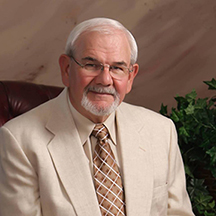
Rev. Don Campbell
Acts 11-12
THOUGHT FOR TODAY, NOVEMBER 20, 2019
“WHAT’S IN A NAME”
In Shakespeare’s play, Juliet, says, “What’s in a name? That which we call a rose by any other name would smell as sweet.” Some tell us that this is true regarding the names we wear religiously. Names must have been important to God because throughout history he has given people names before their birth or changed the name they had been given by their parents: Abram to Abraham, Sari to Sarah, John, etc. (Genesis 17:5,15; Luke 1:13).
In today’s reading, the record says, “In Antioch the disciples were first called Christian” (Acts 11:26). Isaiah said, “The nations shall see your righteousness, and all the kings your glory, and you shall be called by a new name that the mouth of the LORD will give” (Isaiah 62:2). Cornelius was the first Gentile convert (Acts 10). The first Gentile church was established in Antioch (Acts 11), and it was then that the disciples were first called Christians. Regardless of who first uttered the word Christian, it has the divine stamp of approval (1 Peter 4:16). It is upon this name that all believers can—and should unite. Other names, whether given in derision by others or chosen by us divide us. Since the days of the Reformation, preachers have urged—quite unsuccessfully—that believers call themselves Christians.
C.F.W. Walther in a paper titled “Concerning the Name ‘Lutheran,” quoted Luther’s “Admonition Against Insurrection: “I ask that my name be left silent and people not call themselves Lutheran, but rather Christians. Who is Luther? The doctrine is not mine. I have been crucified for no one. St. Paul in 1 Corinthians 3:4-5 would not suffer that the Christians should call themselves of Paul or of Peter, but Christian. How should I, a poor stinking bag of worms, become so that the children of Christ are named with my unholy name? It should not be dear friends. Let us extinguish all factious names and be called Christians whose doctrine we have. The pope’s men rightly have a factious name because they are not satisfied with the doctrine and name of Christ and want to be with the pope, who is their master. I have not been and will not be a master. Along with the church I have the one general teaching of Christ who alone is our master. Matthew 23:8.”
Dr. John Phillips (1927-2010) a Baptist preacher and author of over 50 books wrote: “In the New Testament we do not meet Baptists, Congregationalists, Methodists, or Presbyterians. We do not meet Salvationists, Pentecostals, or Plymouth Brethren. Instead we meet believers, brethren, disciples, Christians, saints. The titles by which God calls His people are all universal in scope and definitive in character.” [emphasis mine, DC]
If names do not matter, then why do we cling to them like cockleburs in a cocker spaniel’s hair? Suppose you are sitting in a restaurant having breakfast with four friends. John self-identifies as a Baptist, Wesley self-identifies as a Methodist, Bill self-identifies as a Presbyterian, Mary self-identifies as a Pentecostal, and when I ask you about your identity, you reply, “I’m a church of Christ.”
In trying to keep names and identifies straight, I attempt to repeat them. I shake hands with John, repeating his name and saying, “I have many Methodist friends like you,” John is sure to correct me: “No, no, I’m a Baptist.” Going on around the table, I shake hands with Wesley, repeat his name and say, “Good to meet you Bill; I have many Presbyterian friends too.” He will surely respond, “No, no, I’m Wesley and I’m a Methodist.” You get the point, right? I then come to you, shake your hand and say your name and say, “I’m a church of Christ too.” Your face lights up. You and I may self-identify as “a church of Christ,” but bless our hearts, we have it all wrong too. We are Christians, a name upon which all agree.
I can hear the objection, “Church of Christ is a scriptural name, dummy. Haven’t you read Romans 16:16: “Greet one another with a holy kiss. All the churches of Christ greet you” (Romans 16:16). “Churches of Christ is one of many scriptural designations that define the body of Christ, but it refers to the congregations belonging to Christ, not the name of its members. Paul also wrote, “Now you are the body of Christ and individually members of it” (1 Corinthians 12:27). Would we dare say, “I’m a body of Christ”? It does little good to protest unscriptural names and then use scriptural designations in unscriptural ways.
I just want to be a Christian, nothing more and nothing less. I hope you do too.
CONNECTIONS
1. A sect is a group that is smaller than the body of Christ and bigger than a single congregation. How does Paul show that sectarianism can exist in a single congregation? (See 1 Corinthians 3:1-4).
2. How did John manifest a spirit of sectarianism and what was Jesus’ response (Luke 9:49-50).
