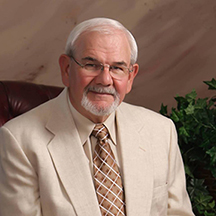
Rev. Don Campbell
Acts 13-14
THOUGHT FOR TODAY, NOVEMBER 21, 2019
“THE DOOR IS OPEN”
Jesus’ final words to the apostles were, “You will be my witnesses in Jerusalem and in all Judea and Samaria, and to the end of the earth” (Acts 1:8). The gospel would be preached in an ever-widening circle. For about a decade, the preaching was only to Jews, proselytes, and Samaritans who accepted the books of Moses. When the time came for the gospel to go to the Gentiles, it took a vision and a voice to convince Peter to open the door of salvation to the Gentiles (Acts 10). Within approximately three years, there was a thriving congregation of Jewish and Gentile Christians worshipping together and sending forth missionaries with the gospel.
Let us not get ahead of the story. There are important details surrounding the first missionary journey in Acts 13-14 that set the stage for the preaching of the gospel to the whole world. This is a transition period for the church as it gradually became more Gentile oriented than Jewish. In each city to which they traveled, they went first to the synagogue, where, as Jews, they would have access to a readymade audience. Each time they spoke, they began with the history of the Jewish people and their disobedience to the law of Moses and ended with Christ being set forth as the fulfillment of the prophecies of the Old Testament (See 13:5; 13:14; 14:1).
An entirely different approach was taken when they preached to Gentiles. They did not appeal to the law of Moses, but to what is often called “natural law,” that which Paul’s lays out in Romans 1:18-31. The thoughts are summarized in Acts 14:15-18, following the attempt at Lystra of some to deify Paul and Barnabas: “‘Men, why are you doing these things? We also are men, of like nature with you, and we bring you good news, that you should turn from these vain things to a living God, who made the heaven and the earth and the sea and all that is in them. In past generations he allowed all the nations to walk in their own ways. Yet he did not leave himself without witness, for he did good by giving you rains from heaven and fruitful seasons, satisfying your hearts with food and gladness.’ Even with these words they scarcely restrained the people from offering sacrifice to them.” When Paul and Barnabas returned to Antioch, having completed their mission, they reported that God “had opened a door of faith to the Gentiles” (Acts 14:27.
The door of faith stands open for both Jew and Gentile. It will never be universally closed until Christ comes again. However, doors of opportunity to enter the kingdom may be closed at certain times in certain areas because the people at those times and places judge themselves unworthy of eternal life (Acts 13:46). Not only so, but doors of opportunity for spreading the gospel may be also be closed when the church fails to enter those doors (Revelation 3:7).
I share with you a short—very short—story about a lost opportunity: The Lord opened a door of opportunity to a church. Someone said that Somebody ought to do something. Somebody said it was not his job to do anything, but that it was Everybody’s job. A committee made up of Someone, Somebody, and Everybody was formed, and after meeting to discuss the problem for 11 months and 29 days, the Committee rendered its judgment that Anybody should analyze the problem and report back to the committee in the next 12 months. As he read all of the best sellers on Doors of Opportunity, searched the internet on the subject, took copious notes and wrote draft after draft, he was struck down by a crippling disease called “The Paralysis of Analysis.” The door closed because nobody did anything.
CONNECTIONS
1. Would you agree that “Talking a problem to death” does not slay the problem, but kills initiative and success?
2. How does the solution-focused maxim “If you keep doing what you have been doing, you will keep getting what you’ve been getting” apply to problem-solving, whether in the life of the church on individual lives?
