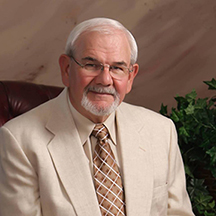
Rev. Don Campbell
Acts 17-18:18
THOUGHT FOR TODAY, NOVEMBER 26, 2019
“GOD AND THE GODS “
As was his custom, when Paul and company arrived at Thessalonica, he sought out a synagogue in which he reasoned with the worshippers from the Scriptures for three Sabbath days. Some responded, but jealous Jews incited a mob against them. They then journeyed to Athens where Paul was deeply troubled when he saw the multitude of idols in the city, including an inscription on one which read “To the unknown god.”
All religious error can be traced to one of three sources: Athens, which represents man’s independent groping for God—Buddhism, Hinduism, and Humanism, and all others not of the Judeo-Christian heritage. The second source of error is Mount Gerizim, which represents perverted religion, which selects part of revelation, like the Samaritans of whom Jesus said, “You worship what you do not know,” or as the NLT reads: “You Samaritans know very little about the one you worship” (John 4:22). This would include Islam, but also any group, liberal or conservative, that picks and chooses parts of truth upon which to build a system of doctrine and worship. The third source of religious error is Jerusalem, which represents types and shadows, long since abolished (Hebrews 10:1). This, of course, is Judaism but can include any group that mingles the types and shadows with the substance—for example, special priesthoods, earthy temples, and so forth.
In Athens, Paul began where they were and attempted to lead them to where they needed to be. After quoting one of their own poets who had declared that all are offspring of God, Paul concluded: “Being then God’s offspring, we ought not to think that the divine being is like gold or silver or stone, an image formed by the art and imagination of man. The times of ignorance God overlooked, but now he commands all people everywhere to repent, because he has fixed a day on which he will judge the world in righteousness by a man whom he has appointed; and of this he has given assurance to all by raising him from the dead” (Acts 17:29-31).
Although idolatry of the kind Paul encountered at Athens is making a comeback, the greater threat to Christianity is not idols of stone, wood, and precious metals, but idols of the mind. In the introduction to his book “Idols for Destruction: Christian Faith and Its Confrontation with American Society, published by Thomas Nelson Publishers, Herbert Schlossberg insightfully wrote of the clash of idols of the mind: capitalism and socialism, individualism and collectivism, statism and libertarianism, rationalism and irrationalism, nature worship and historicism, conservatism and liberalism, reaction and radicalism, elitism and equalitarianism. The conflicting parties and the media create false dilemmas, and the ecclesiastical leaders lunge at them as if the only response to a dilemma were to impale themselves on one of its horns.
The issues of the day are so contrived as to create the illusion that every choice is wrong, that nothing can be done without doing some evil, and that the only question is which course of action is less evil….The participants in this struggle, along with their ecclesiastical admirers, insist that we have to choose between left and right on every issue, that there is no third way. But if we are successful in identifying the first two ways as idols, then it is reasonable to conclude that there must be a third way.” The rest of his book (335 pages) was devoted to finding that way.
You don’t have to read the book—although it would be well worth your time, for Paul gives us the answer in Second Corinthians 6:14-18:
“Do not be unequally yoked with unbelievers. For what partnership has righteousness with lawlessness? Or what fellowship has light with darkness? What accord has Christ with Belial? Or what portion does a believer share with an unbeliever? What agreement has the temple of God with idols? For we are the temple of the living God; as God said,
“I will make my dwelling among them and walk among them,
and I will be their God,
and they shall be my people.
Therefore go out from their midst,
and be separate from them, says the Lord,
and touch no unclean thing;
then I will welcome you,
and I will be a father to you,
and you shall be sons and daughters to me,
says the Lord Almighty.”
CONNECTIONS
1. Michael Marcavage said, “Christians must turn from the endless cycle of voting for the lesser of evils and expecting an unrighteous act to produce a righteous result. From a communist to a cultist, choosing the lesser of two evils is still evil, and never should we do evil that good may come.” Think about it.
2. Can we choose to vote for the lesser of two evils in an attempt to lessen evil so long as we do not expect sweet water to come from a polluted stream? (See James 3:10-12).
