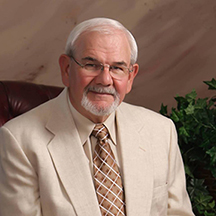
Rev. Don Campbell
1 Samuel 4:8
THOUGHT FOR TODAY, April 9, 2019
“HAVE IT YOUR WAY’ GAME”
Samuel was a son of promise who grew up in the house of God at Shiloh. His life is summed up: “And Samuel grew, and the Lord was with him and let none of his words fall to the ground. And all Israel from Dan to Beersheba knew that Samuel was established as a prophet of the Lord” (3:19-20). Samuel was a circuit-riding judge, but not a warrior as former judges had been (7:3-4;15-17). He was the last judge, the first prophet, and the bridge between God’s rule and the monarchy (8:1-9).
Others had prophesied concerning local events, but Samuel is the first of a line of prophets who predicted the coming of the Christ: “Moses said, ‘The Lord God will raise up for you a prophet like me from your brothers. You shall listen to him in whatever he tells you. And it shall be that every soul who does not listen to that prophet shall be destroyed from the people.’ And all the prophets who have spoken, from Samuel and those who came after him, also proclaimed these days” (Acts 3:22-24).
When the people demanded a king so that they could be like the nations around them, Samuel was distressed and prayed to the Lord who said, “Obey the voice of the people in all that they say to you, for they have not rejected you, but they have rejected me from being king over them. According to all the deeds that they have done, from the day I brought them up out of Egypt even to this day, forsaking me and serving other gods, so they are also doing to you. Now then, obey their voice; only you shall solemnly warn them and show them the ways of the king who shall reign over them” (8:7-9). “So Samuel told all the words of the Lord to the people who were asking for a king from him. He said, ‘These will be the ways of the king who will reign over you: he will take your sons and appoint them to his chariots and to be his horsemen and to run before his chariots. And he will appoint for himself commanders of thousands and commanders of fifties, and some to plow his ground and to reap his harvest, and to make his implements of war and the equipment of his chariots. He will take your daughters to be perfumers and cooks and bakers. He will take the best of your fields and vineyards and olive orchards and give them to his servants. He will take the tenth of your grain and of your vineyards and give it to his officers and to his servants. He will take your male servants and female servants and the best of your young men and your donkeys, and put them to his work. He will take the tenth of your flocks, and you shall be his slaves. And in that day you will cry out because of your king, whom you have chosen for yourselves, but the Lord will not answer you in that day’” (8:10-18). Rejecting this warning, they said, “THERE SHALL BE A KING OVER US” (V.19).
When we refuse to pray, “Your will be done” or they are just words and we want to have a Burger-King religion, God will say, “Your will be done.” However, there are consequences to God’s granting our heart’s desires.
Many lessons could be learned by a nation whose pledge is “One nation under God with liberty and justice for all” and upon whose currency are the words “In God We Trust,” but I will forego those comments in favor of a spiritual application. Almost from the day of the church’s birth, there have been those who chaffed under the word of the Lord as spoken by the apostles and prophets of the Lord (Hebrews 2:1-4). Departures from the faith were predicted by the writers of the New Testament and departures are condemned by Jesus in five of the seven letters to the churches in Asia (Revelations 2-3). Volumes have been written—and more will come—about the departures. We will focus on one thing, worship.
Much that is called “worship in spirit” is really a spirited, emotional response to a shallow desire for entertainment. A. W. Tozer, a pastor in the Christian and Missionary Alliance denomination said in his book Tozer on Worship and Entertainment,. “In our day we must be dramatic about everything. We don’t want God to work unless He can make a theatrical production of it. We want Him to come dressed in costumes with a beard and with a staff. We want Him to play a part according to our ideas. Some of us even demand that He provide a colorful setting and fireworks as well! (The Tozer Pulpit, Book 8, pp. 48-49).
He also wrote, “God calls us to worship and I find this missing in the Church of the Lord Jesus Christ in this day. Instead of worship, we are now second in entertainment to the theaters. I want to tell you something. If I want to see a show I know where I can see a good one put on by top flight geniuses who know what they are doing. If I want a show I’ll duck out and go down to a theater and see a show hot out of Hollywood or London by men and women who are artists in their field. I will not go to a church and see a lot of ham actors putting on a home talent show. And yet, that’s where we are in evangelical circles. We’ve got more show in evangelical circles than anywhere else. (“The Chief End of Man,” Sermon #4, Toronto, 1962).
Tozer would probably be appalled to learn that today many churches have abandoned local performers for the professionals. In some cases, the professionals who played the night before in a nightclub or bar play on Sunday morning for a cheering, clapping congregation who want it their way. Often the music genre is the same on Sunday morning as it was on Saturday night.
CONNECTIONS
1. What are your thoughts on the following: “The carnally minded will find worshiping God in Spirit and truth as boring as watching a snail race”?
2. Many people believe that anything in worship is acceptable so long as we are sincere. Paul says it must be in sincerity and truth (1 Corinthians 5:6-8). Practicing religion without truth, as did the Gentile world (Romans 1:18-32), is to worship in ignorance, something of which God commands all to repent (Acts 17:30). To worship God in truth without sincerity is to worship as hypocrites like the Pharisees and their disciples, which is worse than worshiping God in ignorance (Romans 2:1-11). Have you evaluated your worship?
