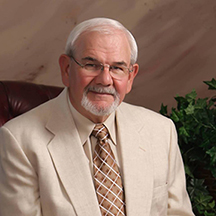
Rev. Don Campbell
2 Samuel 11-12; 1 Chronicles 20
THOUGHT FOR TODAY, May 13, 2019
“DAVID AND BATHSHEBA”
Many who pay little attention to Holy Scripture, can recount the story of David and Bathsheba because of the 1951 film which tells the story Hollywood style and is still available on Amazon.
Time goes by and Solomon is born to the union. Upon David’s death, he became king, and after ruling for 40 years, he died, and the kingdom was divided with 10 tribes rebelling against the house of David and two remaining loyal. We read, “Nevertheless, for David’s sake the Lord his God gave him a lamp in Jerusalem, setting up his son after him, and establishing Jerusalem, because David did what was right in the eyes of the Lord and did not turn aside from anything that he commanded him all the days of his life, except in the matter of Uriah the Hittite” (1 Kings 15:5).
A careless reading might lead one to believe that this is the only sin David ever committed. In 2 Samuel 24, we read of David’s sin in numbering the people, causing 70,000 of them to die of pestilence. However, the sin with Bathsheba was the only time David “utterly scorned the Lord” (2 Samuel 12:14). This whole affair is filled with lessons and warnings, and after much thought, I have decided to offer commentary from two excellent conservative scholars, Adam Clarke and Burton Coffman to show the impact of this one sin not only on David but the nation. Tomorrow’s readings in the psalms will allow us to view the high cost of sin from David’s own perception.
First, Burton Coffman’s thoughts on the sin and David’s attempt to cover it up:
“Our text does not declare that God revealed to Nathan any of the activities of the sinning king, something, of course, which God could have done. It appears to be far more likely that David’s sins were public knowledge throughout Jerusalem. It is nearly impossible for this writer to believe that all of those “servants” who made the report to David concerning that naked woman’s identity, who went to her with the king’s invitation, who escorted her into the king’s presence, took her home afterward and later conveyed her message revealing to David the fact of her pregnancy would have failed to whisper the truth all over the city.
“Yes, and what about all that spying on Uriah? what he did, where he slept, the present sent to him by the king, the king’s extension of his leave from the army, his banquet in the king’s palace, the king’s insistence upon Uriah’s drinking himself into a state of drunkenness and where he slept that following night – There is simply far too much of that for it to have been kept secret. A state dinner in the palace for Uriah would have involved dozens of servants and retainers of the king, and for one to believe that none of them was able to figure out what was going on and then to talk about it afterward is to imagine the impossible.
“Also, there was that letter, of which the text says, “David wrote a letter.” Any action commanded by one in authority is properly ascribed to him; and this does not mean that David himself necessarily penned that communication which Uriah carried to Joab. “Seraiah was secretary” (2 Samuel 8:17), and he must actually have written the letter for David’s signature.
”David might have felt that he had effectively covered up his shameful deeds; but this writer cannot resist the opinion that David was profoundly wrong in such a conceit. Nathan’s perfect knowledge of all that had happened probably began with his hearing some of the gossip that filled Jerusalem. Gossip is never either accurate or dependable; and when God sent Nathan to David, the Lord no doubt endowed his prophet with a true knowledge of everything that happened.”
Second, Adam Clarke’s thoughts on David’s unknowingly passing judgment on himself when he declared that the man who had taken another’s lamb would restore the lamb fourfold and he himself would die:
“Thou art this son of death, and thou shalt restore this lamb Fourfold. Is it indulging fancy too much to say David was called, in the course of a just Providence to pay this fourfold debt? to lose four sons by untimely deaths, viz., this son of Bath-sheba, on whom David had set his heart, was slain by the Lord; Amnon, murdered by his brother Absalom; Absalom, slain in the oak by Joab; and Adonijah, slain by the order of his brother Solomon, even at the altar of the Lord! The sword and calamity did not depart from his house, from the murder of wretched Amnon by his brother to the slaughter of the sons of Zedekiah, before their father’s eyes, by the king of Babylon. His daughter was dishonored by her own brother, and his wives contaminated publicly by his own son! How dreadfully, then, was David punished for his sin! Who would repeat his transgression to share in its penalty? Can his conduct ever be an inducement to, or an encouragement in, sin? Surely, No. It must ever fill the reader and the hearer with horror. Behold the goodness and severity of God! Reader, lay all these solemn things to heart.”
1. When Nathan said, “The Lord has put away your sin; you shall not die,” was he saying, “All is forgiven?” or “The punishment for adultery is death, but you will not be put to death by me or another appointed by me”?
2. David broke four of the ten commandments. Can you identify them?
