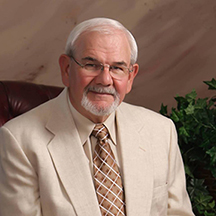
Rev. Don Campbell
1 Corinthians 1-4
THOUGHT FOR TODAY, NOVEMBER 29, 2019
“LET THERE BE NO DIVISIONS”
The introduction to Paul’s first epistle to Corinth frames the picture we see when we study the epistle: “The city of Corinth was at the heart of an important trade route in the ancient world. Like many cities that thrive on trade, Corinth had a reputation for sexual immorality, religious diversity, and corruption. The church that Paul planted there (Acts 18) floundered under all of these influences and began to divide over various issues.” In today’s reading the focus is on divisions in the church, which had been reported to Paul by some of the house of Chloe (1:11). They were dividing the body of Christ into parties, with different groups calling themselves by the names of their favorite preacher. There is some evidence that they were not really calling themselves after Paul and Apollos, for he said, “I have applied all these things to myself and Apollos for your benefit, brothers” (4:6).
By whatever names they called themselves, Paul gave three reasons why it was—and is to this day—wrong to call ourselves after a man or a system. Paul points first to baptism. They were not baptized in Paul’s name, but in the name of Christ (1:13-15). Paul would write to the church at Ephesus saying, “There is one body and one Spirit—just as you were called to the one hope that belongs to your call— one Lord, one faith, one baptism, one God and Father of all, who is over all and through all and in all” (4:4-6).
Second, Paul points to the gospel, which is Christ crucified: “For since, in the wisdom of God, the world did not know God through wisdom, it pleased God through the folly of what we preach to save those who believe. For Jews demand signs and Greeks seek wisdom, but we preach Christ crucified, a stumbling block to Jews and folly to Gentiles, but to those who are called, both Jews and Greeks, Christ the power of God and the wisdom of God. For the foolishness of God is wiser than men, and the weakness of God is stronger than men” (1:21-25). Wise men, noble men, powerful men may do many things for us, but they cannot die for us.
Third, Paul sets the standard for all things as “that which is written” (4:6). The Scriptures, and only the Scriptures, are the rule of faith and practice for the church. In his first letter to Timothy, Paul urged him to remain anchored in the Scriptures and in the things that Paul had spoken, which in written form constituted Scripture, as Peter says (2 Peter 3:14-16). Paul wrote to Timothy: “You, however, have followed my teaching, my conduct, my aim in life, my faith, my patience, my love, my steadfastness, my persecutions and sufferings that happened to me at Antioch, at Iconium, and at Lystra—which persecutions I endured; yet from them all the Lord rescued me. Indeed, all who desire to live a godly life in Christ Jesus will be persecuted, while evil people and impostors will go on from bad to worse, deceiving and being deceived. But as for you, continue in what you have learned and have firmly believed, knowing from whom you learned it and how from childhood you have been acquainted with the sacred writings, which are able to make you wise for salvation through faith in Christ Jesus. All Scripture is breathed out by God and profitable for teaching, for reproof, for correction, and for training in righteousness, that the man of God may be complete, equipped for every good work” (2 Timothy 3:10-17). If a creed contains less than the word of God, it is too little. If it contains more than the word of God, it is too much. If it contains just the word of God, it is a waste of manpower and money to print it.
CONNECTIONS
1. A creed is “a statement of the shared beliefs of community in the form of a fixed formula summarizing core tenets.” Does a creed have to be in official written form, or can interpretations and inferences become unwritten creeds?
2. It has been said often that “The Bible only makes Christians only.” Professing to be Christians only is not the same as being the only Christians. In spite of the many problems plaguing Corinth, what does Paul call them in his salutation (1:2)?
