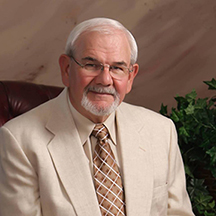
Rev. Don Campbell
Matthew 22, Mark 12
THOUGHT FOR TODAY, NOVEMBER 4, 2019
“LOVING GOD FROM CENTER TO CIRCUMFERENCE”
Testing Jesus, a lawyer asked which was the great commandment. Jesus replied, “You shall love the Lord your God with all your heart and with all your soul and with all your mind. This is the great and first commandment. And a second is like it: You shall love your neighbor as yourself. On these two commandments depend all the Law and the Prophets” (Matthew 22:37-40).
Sensing the awe-inspiring glory of this text, we are tempted to search for exalted words and ideas to discuss it, but there are no heavenly words to describe love. We must use ordinary language. Even illicit love is not different in its manifestation, but in its object (e.g. the love of money, which is the root of all kinds of evil). The object of one’s love may be legitimate, but if this love replaces love for God, it is still illicit— “he who loves mother or father more than me, is not worthy of me.” This being true, we can talk about the great commandment in the same way we talk about any other type of love.
If we say: “Dennis loves football,” we know that he is involved in it, he is excited about it, and he is dedicated to it (neither Dennis nor his zeal is hypothetical, as anyone who knows him can vouch). If we say, “Mary loves John,” we know that she delights in his presence, is concerned about his welfare, and rejoices in his accomplishments.
But, if we say, “We must love God,” someone might ask, “Well, what do you mean by the word ‘love’?” Doesn’t it mean that we delight in his company and the company of his people, that we rejoice in his works, that we are involved in, excited about, and dedicated to his cause? Loving God is not fundamentally different from loving any other person. When Jesus said, “And the second is like it: ‘You shall love your neighbor as yourself,’” he used the same Greek word (Matthew 22:39).
There is a temptation to dissect heart, soul, and mind, which is something only God can do (Hebrews 4:12). The problem arises when we try. Instead of a loving relationship we have religion, of which C. S. Lewis wrote: “It [religion] carries the suggestion that this is one more department of life, an extra department added to the economic, the social, the intellectual, the recreational, and all the rest. But that whose claims are infinite can have no standing as a department. Either it is an illusion or else our whole life falls under it. We have no non-religious activities; only religious and irreligious” (as quoted in Reflections, C.S. Lewis Institute, August 2014).
When religion is substituted for a loving relationship with God, we cease being on fire or zealous and become an emetic to the Lord—that’s Greek for “makes you want to punk.” “So then, because you are lukewarm, and neither cold nor hot, I will vomit you out of My mouth” (Revelation 3:16, NKJV).
To love God with all our heart, soul, and mind means simply to hold back nothing consciously, subconsciously, or unconsciously—nothing intellectually, emotionally, or volitionally. In other words, it is to love with the totality of our being—to love from center to circumference.
At the heart of all the church’s problems is religion, the “bastard wheat” or tares of Satan, mixing in with the wheat, and showing itself in such things as poor attendance, poor contribution, poor Bible knowledge, legalism, formalism, and sectarianism.
CONNECTIONS
1. Give yourself the “love test.” Do you delight in God’s company and the company of his people, do you rejoice in his works, are you involved in, excited about, and dedicated to his cause? If not, my old friend Dennis loves Denver Broncos football more than you love the Lord.
2. If we find it easier to attend church than to love our neighbor, what does this say about our “love”? (1 John 4:20)
