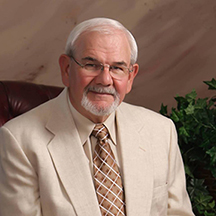
Rev. Don Campbell
Nehemiah 11-13
October 27, 2020
“Misshapen Forms of Church Government”
Some people contend that the church needs no government since we are all ruled by God through his written word. It is not possible for any nation, carnal or spiritual, to be ruled solely by a written document. Consider the well-known instructions of Jesus concerning our dealing with conflict in the church:
“If your brother sins against you, go and tell him his fault, between you and him alone. If he listens to you, you have gained your brother. But if he does not listen, take one or two others along with you, that every charge may be established by the evidence of two or three witnesses. If he refuses to listen to them, tell it to the church. And if he refuses to listen even to the church, let him be to you as a Gentile and a tax collector. Truly, I say to you, whatever you bind on earth shall be bound in heaven, and whatever you loose on earth shall be loosed in heaven. Again I say to you, if two of you agree on earth about anything they ask, it will be done for them by my Father in heaven. For where two or three are gathered in my name, there am I among them” (Matthew 18: 15-20).
The apostle Paul applies the principle when he writes:
“When one of you has a grievance against another, does he dare go to law before the unrighteous instead of the saints? Or do you not know that the saints will judge the world? And if the world is to be judged by you, are you incompetent to try trivial cases? Do you not know that we are to judge angels? How much more, then, matters pertaining to this life! So if you have such cases, why do you lay them before those who have no standing in the church? I say this to your shame. Can it be that there is no one among you wise enough to settle a dispute between the brothers, but brother goes to law against brother, and that before unbelievers?” (1 Corinthians 6:1-6).
It is often said that the United States is a nation of law and that our Constitution is the arbiter of all disputes. But we have a judicial system with courts, judges, prosecutors, and defense attorneys who debate and interpret the Constitution and all the laws ordered under the Constitution. People must interpret and apply the Scriptures, just as people must interpret and apply the law of the land.
On the other hand, some would make slaves of God’s people, calling for unquestioning obedience to what sometimes amounts to a handful of petty, whimsical, ignorant little men who are not qualified to muck out the barn, much less shepherd the Lord’s sheep.
Somewhere between these two extremes lies the truth. On our way to discovering the truth, we will examine three basic forms of government. There are many more leadership styles within these basic forms, and we will be studying those in lesson five. But forms of church government—or any kind of government for that matter—can be categorized under three headings: monarchy, oligarchy, and democracy.
The word monarchy comes from two words: “mono,” meaning one, and “arch,” meaning ruler. There are lesser rulers, but one person has absolute and final authority in all areas of government—legislative, executive, and judicial. Monarchies fall into two classes: legal and de facto. An example of a legal religious monarchy is Catholicism. The pope is the legally recognized head of the Catholic Church. De facto monarchies are often known as dictatorships. The situation in 3 John 9-10 was a de facto monarchy, as seen clearly in the Contemporary English Version’s rendering of the passage:
“I wrote to the church. But Diotrephes likes to be the number-one leader, and he won’t pay any attention to us. So if I come, I will remind him of how he has been attacking us with gossip. Not only has he been doing this, but he refuses to welcome any of the Lord’s followers who come by. And when other church members want to welcome them, he puts them out of the church.”
De facto monarchies often spring up as a result of a crisis or exceptional circumstance in which someone must take charge. When the crisis is over or the exceptional circumstances have ended, the structure remains.
One-man rule is sometimes found in a congregation where someone had to step forward and lead and his leadership became entrenched. There are, of course, benign dictatorships, just as there were good kings during the days of the kings. One of the dangers in even a benign dictatorship is that when the benign leader is gone and the system has become established, another dictator who is not benign rises to fill the void in leadership. In the example of the Old Testament kings, one of the following expressions is repeated each time the mantle of leadership passed to a new king: “And he did what was right in the sight of the Lord, according to all that his father David had done,” or “he did evil in the sight of the Lord, and walked in the way of his father.”
Truly godly men do not want to rule over God’s people. Even in times of crisis when someone must step forward and lead, they do not grasp for power. They will lead in the spirit of Nehemiah whose heart was troubled with the plight of Jerusalem, so he led the people in rebuilding its walls, but he refused to rule over the people. He was the epitome of servant leadership, saying,
“Each governor before me had been a burden to the people by making them pay for his food and wine and by demanding forty silver coins a day. Even their officials had been a burden to the people. But I respected God, and I didn’t think it was right to be so hard on them” (Nehemiah 5:15, CEV)
There are benign legal monarchies and oppressive legal monarchies. There are benign de facto monarchies and oppressive de facto monarchies. But neither is God’s pattern for church government. Let’s consider the second form of government.
An oligarchy is the rule of a few. Many oligarchies are aristocracies. The word aristocracy means “rule by the best.” In carnal governments, the aristocracy is based on wealth and family ties. Wealth alone usually does not entitle one to a place in the aristocracy. As with monarchies, oligarchies may be legal or de facto. For example, bishops in the Episcopal Church constitute a legal oligarchy. Churches of Christ sometimes have de facto oligarchies—aristocracies that are based on family ties, charisma, and even conspiracy.
I visited a congregation several years ago to “try out.” There were no elders, so I had been contacted by a member of “The Committee.” I did not find this at all strange, as congregations often appoint pulpit committees to sift applicants, set up preaching appointments, and so forth. After the morning worship, there was a potluck. It became clear that the congregation wanted me to accept the position. Since there were no elders, I assumed that I would meet that afternoon with all the men who desired to meet. Time marched on. Finally, I asked one of the men on “the committee” if we would be meeting. He responded that I would meet with him and the other committee member. I found that to be somewhat strange and it made me somewhat uneasy. I did meet with the committee and was offered the position. However, my uneasiness, coupled with that of my wife, caused me to tell them that I wanted to spend more time in prayer before I gave them my decision.
There was a retired preacher in the congregation whom I felt I could trust. I was able to contact him by telephone after returning home and communicate some concerns to him. He told me that my fears were well-grounded. The committee had been selected about 12 years earlier to act as a committee should act. However, once the preacher was selected, the committee did not disband. Instead, they began functioning as a dictatorial eldership. They would promise me anything, he said; but once I was there, they would change the terms of our agreement. To borrow from Jesus’ statement concerning the scribes and Pharisees in Matthew 23:2, “They had seated themselves in the seat of the elders.” No one seemed to know how to get rid of this oligarchy of two. I had no desire to take on that task.
Oligarchies, like dictatorships, sometimes arise out of a need for someone to step forward and lead in a time of crisis. They may be benign—at least in the beginning; but we need to be reminded that power corrupts, and absolute power corrupts absolutely. This committee had tasted power and liked it. The last I heard anything about the congregation these two men still had a firm grip on its throat.
Since oligarchy means rule by a few, we might jump to the conclusion that this is God’s form of church government and that the eldership constitutes the scriptural or legal embodiment of this form of government. While oligarchies more closely resemble the form of government revealed in the New Testament, there are differences—very important differences—that must be noted. We will see these differences in our next chapter, which is entitled: When All Else Fails, Read the Directions. But the final part of this lesson deals with the third basic form of government, democracy.
Democracy is the rule of many, with “demo” meaning people. Theoretically, the majority rules for the good of all, but frequently the shots are called by a very vocal minority and special interest groups. In many monarchies when the king would speak, the people would respond, “the voice of the gods.” Sometimes the “voice of the people” is elevated to the voice of God in democracies, including democratic churches. There are several problems with a democratic church.
First, biblical principles of subjection are violated. In our society, the voice of an 18-year-old—at least when it comes to the voting booth—carries the same weight as the voice of a 65-year-old. When votes are taken in the church, the same is true. But Peter teaches that the younger are to submit to the older (1 Peter 5:5). Paul teaches that the unlearned should be subject to the learned. He wrote, “Now I urge you, brothers—you know that the household of Stephanas were the first converts in Achaia, and that they have devoted themselves to the service of the saints—be subject to such as these, and to every fellow worker and laborer. (1 Corinthians 16:15-16).
Also, in a democratic church, the biblical injunction of submission may be violated. But Paul teaches that women are to be in subjection. In contrast to the novice and the young person, women are not required to be in subjection because they lack maturity in spiritual things. Paul points rather to the order of creation and the deception of Eve as the reasons. Wise elders will value the wisdom of the women of the congregation and will encourage the women to make their voices heard. However, this does not change the truth about how women are to make their voices heard.
Second, biblical principles of humility and love may be easily violated in a democratic church. Paul wrote of Christ, “For Christ did not please himself, but as it is written, ‘The reproaches of those who reproached you fell on me’” (Romans 15:3). And he exhorts us:
“Let this same attitude and purpose and [humble] mind be in you which was in Christ Jesus: [Let Him be your example in humility:] Who, although being essentially one with God and in the form of God [possessing the fullness of the attributes which make God God], did not think this equality with God was a thing to be eagerly grasped or retained, But stripped Himself [of all privileges and rightful dignity], so as to assume the guise of a servant (slave), in that He became like men and was born a human being” (Philippians 2:5-7, Amplified Version)
Mob-archy often results as it did in Numbers 16 when Korah and his gang rebelled against Moses and Aaron. “We are the people,” they said. “Our voice is equal to your voice, Moses.” The ground opened up and swallowed them.
I have never seen a purely democratic church in which every member had an equal voice in every matter. I have seen three supposedly democratic forms of government, which we can understand by comparing them to different forms of city government.
The first is the city council form. The elders are elected and are answerable to the people. In recent years elders are being “elected” to specific terms and must stand for “reelection” periodically. One argument that is made in favor of this practice is that with the mobility of people today, many people in the congregation had no voice in the selection of the elders. Everyone does have a voice—or a choice—as to whether they will worship in a given congregation and serve under the oversight of a given eldership. When people choose to place membership with a congregation, they are voting, so to speak, for that eldership.
The second is the city manager form. The elders are the council, which hires the manager who is the pastor—by whatever name he may be called We may call him preacher, minister, or evangelist; but if he walks like a duck, quacks like a duck and swims like a duck, he is probably a duck. This, I believe, has been one of the most common forms of government among churches of Christ for many years.
The third form is the town meeting. This is, in most cases, the men’s business meeting, which often becomes an aristocracy. Sometimes this is by default. It is the few, only the few, and always the few who show up for meetings. At other times it is the result of powerful, domineering personalities. At other times it might even be the result of a conspiracy.
Does the local congregation have a right to choose what form of government it will have—monarchy, oligarchy, or democracy? We will discuss this in the next chapter. Before moving on to that lesson, ponder this statement: There is a difference between choosing the form of government a church will have and choosing the governors—and there are always governors if there is government. As indicated, the governors may be representatives of the people or they may be the people themselves. But a church cannot exist without order and order cannot exist without government.
Thinking It Through
1. Church history reveals the rise of the three major forms of church government discussed. The rise of the papacy marked the rise of the monarchial form of church government. The Reformation Movement resulted in the rise of the oligarchical form, adopted by many mainline protestant groups, and the flourishing of the democratic form of government coincided with the rise of political democracy, revealing itself in denominationalism. What has been good and what has been bad about this movement?
2. Of the three forms of “democratic churches” discussed in this chapter, which one have you most often witnessed in the churches of Christ?
3. Resulting from the mobility of society, the demographics of congregations frequently change. How can elders deal with this issue without “standing for reelection”?
4. In many disciplines (science, education, politics, etc.) the term open system vs. closed system is used. Open systems interact with the environment, being influenced by it and influencing it. Closed systems are often isolationist. Examine Matthew 5:13-16, John 17:14-18, and 1 Corinthians 5:9-1. Should the church, beginning with its leaders, be an open or closed system?
5. According to a report released by the U.S. Census Bureau, 36 million people moved in the last year. This sounds high but is less than 12% of the population. Nearly two-thirds of the number stayed in the same county. Do these figures suggest that the issue that some raise of newcomers not having had a voice in the selection of elders is just a shallow argument to prop up an unbiblical idea of elders standing for re-election?
“Link to YouTube Video – The Battle Hymn of the Republic”
