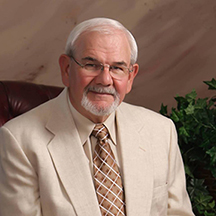
Rev. Don Campbell
Numbers 3-4
THOUGHT FOR TODAY, FEBRUARY 24, 2019
ON PRIESTS AND PREACHERS
The duties of setting up, taking down, and transporting the tabernacle, along with various acts of daily service were divided among the sons of Levi. Males from a month old and upward totaled 22,000. We will see in tomorrow’s reading that they began serving at age 30 and their service ended at age 50 (4:3). Not all served, of course, at the same time. One group would go off duty on the Sabbath and another group would come on duty (2 Chronicles 23:8).
There is an apparent discrepancy between the age of service given in Numbers 4:3 and that given in 8:24, which says they began at age 25. Jamieson in Jamieson-Fausett-Brown Commentary suggest a very reasonable solution: “They entered on their work in their twenty-fifth year as pupils and probationers, under the superintendence and direction of their senior brethren; and at thirty they were admitted to the full discharge of their official functions.”
In the past, some in championing the biblical truth of the priesthood of all believers, disdained full-time preachers of the gospel whom they called “hireling priests.” This was another example of someone’s taking a foot-long truth and stretching it to a yard-long error. That every baptized male believer is equipped to minister the word of God to the saints flies in the face of Paul’s teachings on the various functions of the body (1 Corinthians 12) and his affirmation of the right of those who minister the word to be supported in that work (1 Corinthians 9:8-10). It is just as true that every believer is a priest who can offer spiritual sacrifices to God through our great high priest, Jesus Christ. It is also true that there is no order of priests that are separate from the priesthood of all believers in the kingdom of God today.
Jesus called and equipped 12 men who would take the gospel to all the world after he ascended back to the Father. He mentored them for three years before he commissioned them. None whom he called were beardless boys, but mature men. Some might point to the young man Timothy as an exception. We are not told his exact age, and some say he was young as 16 when Paul first met him. Others believe he was as old as 33. What we do know for certain is that he had been educated from childhood by his mother and grandmother (2 Timothy 1:5-7), inspired prophecy had been given in reference to his work (1 Timothy 1:18), he had been commissioned by a council of elders (1 Timothy 4:14), and he had traveled with Paul on one Paul’s journeys (Acts 16:1-5). Timothy was not an adolescent filled with zeal and nothing else. He was a well-prepared man when Paul left him at Ephesus to set the church in order.
CONNECTIONS
1. Can a preacher be too young or too old? The answer is obviously yes, but what beyond the calendar should be the criteria for making that determination?
2. Whose responsibility is it to make sure the next generation of leaders are prepared?
