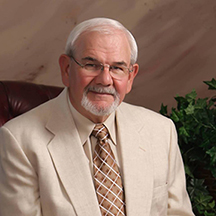
Rev. Don Campbell
Ezekiel 35-37
THOUGHT FOR TODAY, September 7, 2019
“PREACHING TO DRY BONES”
The captives were saying that their bones had dried up and their hope was lost (Ezekiel 37:11). God gave Elijah a vision which assured them that there would be some who would return to the land and rebuild: “The hand of the LORD was upon me, and he brought me out in the Spirit of the LORD and set me down in the middle of the valley; it was full of bones. And he led me around among them, and behold, there were very many on the surface of the valley, and behold, they were very dry. And he said to me, ‘Son of man, can these bones live?’ And I answered, ‘O Lord GOD, you know.’ Then he said to me, ‘Prophesy over these bones, and say to them, O dry bones, hear the word of the LORD. Thus says the Lord GOD to these bones: Behold, I will cause breath to enter you, and you shall live. And I will lay sinews upon you, and will cause flesh to come upon you, and cover you with skin, and put breath in you, and you shall live, and you shall know that I am the LORD’” (Ezekiel 37:1-6).
During the days of Ezra and Nehemiah, many of the captives did return and rebuilt Jerusalem and the temple. But God assured his people of a day of glory which would make even Solomon’s temple pale by comparison: “My servant David shall be king over them, and they shall all have one shepherd. They shall walk in my rules and be careful to obey my statutes. They shall dwell in the land that I gave to my servant Jacob, where your fathers lived. They and their children and their children’s children shall dwell there forever, and David my servant shall be their prince forever. I will make a covenant of peace with them. It shall be an everlasting covenant with them. And I will set them in their land and multiply them, and will set my sanctuary in their midst forevermore. My dwelling place shall be with them, and I will be their God, and they shall be my people. Then the nations will know that I am the LORD who sanctifies Israel, when my sanctuary is in their midst forevermore” (Ezekiel 37:24-28).
That he is speaking of the day of Christ is clear: “Brothers, I may say to you with confidence about the patriarch David that he both died and was buried, and his tomb is with us to this day. Being therefore a prophet, and knowing that God had sworn with an oath to him that he would set one of his descendants on his throne, he foresaw and spoke about the resurrection of the Christ, that he was not abandoned to Hades, nor did his flesh see corruption. This Jesus God raised up, and of that we all are witnesses. Being therefore exalted at the right hand of God, and having received from the Father the promise of the Holy Spirit, he has poured out this that you yourselves are seeing and hearing. For David did not ascend into the heavens, but he himself says, ‘“The Lord said to my Lord, ‘Sit at my right hand, until I make your enemies your footstool.’” Let all the house of Israel therefore know for certain that God has made him both Lord and Christ, this Jesus whom you crucified” (Acts 2:29-36).
There are at least three kingdom lessons: One, there is no such thing as a hopeless situation when God is at work. Two, God uses the kingdoms of the world to accomplish his purpose without aligning the kingdom of heaven with them (Ezra 1:1-5). Three, we should pray for rulers, not align ourselves with them: “First of all, then, I urge that supplications, prayers, intercessions, and thanksgivings be made for all people, for kings and all who are in high positions, that we may lead a peaceful and quiet life, godly and dignified in every way. This is good, and it is pleasing in the sight of God our Savior, who desires all people to be saved and to come to the knowledge of the truth” (1 Timothy 2:1-4).
CONNECTIONS
1. Christians are (or least should be) a nation within a nation. We sojourn as exiles in the kingdoms of the world, but our citizenship is in heaven. Peter urges, “Beloved, I urge you as sojourners and exiles to abstain from the passions of the flesh, which wage war against your soul. Keep your conduct among the Gentiles honorable, so that when they speak against you as evildoers, they may see your good deeds and glorify God on the day of visitation” (1 Peter 11-12). As we try to balance our duties to earthly rulers (1 Peter 2:13-17) with kingdom responsibilities, we face two dangers: The first is assimilation in which we lose our saltiness by being mixed with the world, and the second is isolationism in which we become a gated community, cutting ourselves off from those to whom we should be manifesting the glory of God. Which does it seem to you we are in danger of at this point in history?
2. Some have concluded that just as Ezekiel’s valley of dry bones is symbolic that the resurrection promised in the N.T. is just a symbol teaching that God can bring about good even out of a bad situation. What does Jesus say about this? (John 5:25-29).
