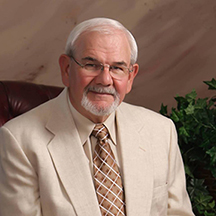
Rev. Don Campbell
Exodus 39-40
THOUGHT FOR TODAY, FEBRUARY 12, 2019
THE CHRISTIAN ALTAR
Construction of the tabernacle is completed. Both it and Aaron and his sons are consecrated that they might serve as priests (Ex 40:1-33). When Moses finished the work, the cloud which had been leading them by day “covered the tent of meeting, and the glory of the Lord filled the tabernacle. And Moses was not able to enter the tent of meeting because the cloud settled on it, and the glory of the Lord filled the tabernacle” (Ex 40:34-35).
It is often suggested that Moses could not enter the tabernacle because of the glory of the Lord. This seems unlikely because Moses had often been in the presence of God and not only saw his glory but partook of it as his face would glow each time he was in God’s presence. The reason Moses could not enter any longer is found in Numbers chapter 18: Only Aaron and his sons could be high priests and enter the tent or perform the services. The Levites kept guard and performed various services, but they could not attend to the altar or anything inside the tent (vv.2-7). The other tribes could not come near the tent (vv.21-22).
The writer of Hebrews sums it up: “These preparations having thus been made, the priests go regularly into the first section, performing their ritual duties, but into the second only the high priest goes, and he but once a year, and not without taking blood, which he offers for himself and for the unintentional sins of the people” (Heb 9:6-7).
In contrast to this exclusiveness, we have an altar of which every believer can eat (Heb 13:10) and we can confidently enter the holy place, in contrast to the old in which only the high priest could enter (Heb 10:19-23).
With privilege comes responsibility: “So the Lord said to Aaron, ‘You and your sons and your father’s house with you shall bear iniquity connected with the sanctuary, and you and your sons with you shall bear iniquity connected with your priesthood’” (Num 18:1).
We are priests with accompanying responsibilities: “We have an altar from which those who serve the tent have no right to eat. For the bodies of those animals whose blood is brought into the holy places by the high priest as a sacrifice for sin are burned outside the camp. So Jesus also suffered outside the gate in order to sanctify the people through his own blood. Therefore let us go to him outside the camp and bear the reproach he endured. For here we have no lasting city, but we seek the city that is to come. Through him then let us continually offer up a sacrifice of praise to God, that is, the fruit of lips that acknowledge his name. Do not neglect to do good and to share what you have, for such sacrifices are pleasing to God” (Heb 13:10-16).
The altar at which we eat is Christ himself, as seen in his confrontation with some Jews about the bread of life: “‘I am the living bread that came down from heaven. If anyone eats of this bread, he will live forever. And the bread that I will give for the life of the world is my flesh.’ The Jews then disputed among themselves, saying, ‘How can this man give us his flesh to eat?’ So Jesus said to them, ‘Truly, truly, I say to you, unless you eat the flesh of the Son of Man and drink his blood, you have no life in you. Whoever feeds on my flesh and drinks my blood has eternal life, and I will raise him up on the last day. For my flesh is true food, and my blood is true drink. Whoever feeds on my flesh and drinks my blood abides in me, and I in him’” (John 6:51-56). Jesus is not speaking of the Lord’s Supper, which symbolizes his body and blood. The confusion is cleared up when we look at the context. In John 6:47, Jesus said, “truly, truly, I say to you, whoever believes has eternal life.” In verse 54 he says, “Whoever feeds on my flesh and drinks my blood has eternal life, and I will raise him up at the last day.” To feed on Christ is to live by faith in his death and his life. His death because he died for our sins. His life because the living Lord lives in us (Col 1:26-28).
CONNECTIONS Rom 3:21-26
1. When Jesus said, “Blessed are those who hunger and thirst for righteousness, for they shall be satisfied,” was saying that those who hunger and thirst after him will be spiritually satisfied (See Rom 3:21-26, Eph 3:14-19).
2. How does the Holy Spirit participate in this filling or satisfaction? (Eph 3:14-19).
