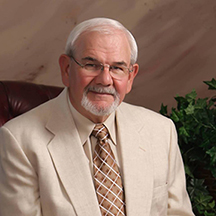
Rev. Don Campbell
2 Kings 5-8
THOUGHT FOR TODAY, July 3, 2019
“THE HEALING OF NAAMAN”
Naaman was a mighty man of valor, the commander of the Syrian army. He was also a leper. A young Jewish girl who had been carried away by the Syrians served in his house as a maid. She suggested to her mistress that Naaman should go to the land of Israel and seek out the prophet of God who could heal him. After going to the wrong place—the palace of the king of Israel, Naaman finally ended up at the door of Elisha. He was disappointed and outraged that Elisha did not come out and make a big production of the healing, but said instead, “Go wash in the Jordon seven times, and your flesh shall be restored, and you shall be clean” (2 Kings 5:10).
If taking a bath in a river was the only advice Elisha could give, then Naaman would go wash in the rivers of his own country, which he deemed much better than the waters of the Jordon. He left in a rage (2 Kings 5:10-12). His servants intervened with sound advice to which he gave heed and went and dipped in the Jordon and was cleansed (2 Kings 5:14).
Naaman was right about one thing: Water is water and that in the Jordon is no more powerful than that in the muddy Mississippi. One website bottles and sells water from the Jordon (at least that’s the hype) which proclaims: “The Church strongly urges Christians around the world to use Holy Water on themselves and their loved ones. Holy Water from the Jordan River is a cure for mind, body and soul and can be used to bless your home. Many and great are the spiritual and temporal benefits derived from the use of Holy Water. If you seek spiritual, emotional or physical healing, Holy Water from the Jordan River is your answer.” Superstition is alive and well. It was not that the waters of the Jordon contained healing powers, nor was there some spiritual power in dipping seven times.
Some draw parallels with this incident and with baptism. No inspired writer does so. There are some lessons to be learned, but there are no parallels with the healing of Naaman and baptism. Here’s why: First, Naaman’s dipping related to the purification of the flesh, something which Peter says is not true of our baptism (1 Peter 3:21). Second, Naaman was not immersed but immersed himself. In every New Testament reference to baptism, the subject of baptism is passive, not active. We are buried; we do not bury ourselves. We are crucified; we do not crucify ourselves (See Romans 6:1-11).
There are some lessons: First, there is no power in the water in which one is baptized. I remember from childhood days that some contended that the water had to be running water. Second, there is no power in the act of immersing. Third, there is no power transferred from the person performing the baptism to the person being baptized as there was in the laying on of the apostle’s hands to impart spiritual gifts (Acts 8:17-19).
Baptism is commanded, but the act itself does not work salvation. It is the point at which we publicly proclaim our faith in the crucified Christ and put him on: “For you are all children of God through faith in Christ Jesus. And all who have been united with Christ in baptism have put on Christ, like putting on new clothes” (Galatians 3:26-27, NLT).
The Lord’s supper is the ordinance by which those who have clothed themselves with Christ continue to proclaim their faith in his sacrifice: “For I received from the Lord what I also delivered to you, that the Lord Jesus on the night when he was betrayed took bread, and when he had given thanks, he broke it, and said, ‘This is my body, which is for you. Do this in remembrance of me.’ In the same way also he took the cup, after supper, saying, ‘This cup is the new covenant in my blood. Do this, as often as you drink it, in remembrance of me.’ For as often as you eat this bread and drink the cup, you proclaim the Lord’s death until he comes” (1 Corinthians 11:23-27).
The same truths apply to the Lord’s supper that apply to baptism: There is no inherent power in the fruit of the vine and bread. There is no power passed to the bread and fruit of the vine by the act of blessing. There is no inherent power in the act itself. The power is in God’s grace which we lay hold of by faith: “For by grace you have been saved through faith” (Ephesians 2:8).
CONNECTIONS
1. Looking again a Naaman, when was he cleansed—when he obeyed or before he obeyed?
2. Looking at our salvation, are we saved when we are united with Christ’s death in baptism (Romans 6:3) or before we are united with his death?
