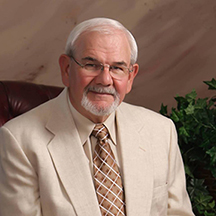
Rev. Don Campbell
1 Chronicles 6
THOUGHT FOR TODAY, April 27, 2019
“THE IMPORTANCE OF THE WORD ‘BUT'”
Frequently the word “but” is like a flag waving to gain our attention, especially when the word “God” is added. For example, Paul says, “We all once lived in the passions of our flesh, carrying out the desires of the body and the mind, and were by nature children of wrath, like the rest of mankind. But God, being rich in mercy, because of the great love with which he loved us, even when we were dead in our trespasses, made us alive together with Christ—by grace you have been saved” (Ephesians 2:3-5).
The “but” of our text is almost hidden among the many branches and foliage of Levi’s family tree. The chronicler has listed them one by one, saying that they were all appointed for service in the tabernacle (v. 49), “But Aaron and his sons made offerings on the altar of burnt offering and on the altar of incense for all the work of the Most Holy Place, and to make atonement for Israel, according to all that Moses the servant of God had commanded” (v.49). Only the descendants of Aaron could perform the high-priestly duties. The genealogies are therefore essential, for “no one takes this honor for himself, but only when called by God, just as Aaron was. So also Christ did not exalt himself to be made a high priest, BUT was appointed by him who said, ‘You are my Son, today I have begotten you’; as he says also in another place, ‘You are a priest forever, after the order of Melchizedek” (Hebrews 5:5-6).
One more “but.” “The former priest were many in number, because they were prevented by death from continuing in office, BUT he holds his priesthood permanently, because he continues forever. Consequently, he is able to save to the uttermost (completely or at all times) those who draw near to God through him, since he ever lives to make intercession for them” (Hebrews 7:23-25).
Our high priest offered a once-for-all sacrifice for our sins, but he ever lives to make intercession for us; therefore, we have confidence to enter the holy places by the blood of Christ, for we are a chosen nation, a royal priesthood. The least believer can enter into the presence of God, something only the descendants of Aaron could do under the shadow of the good things to come, and that but once a year.
CONNECTION
1. Like children hiding behind a door because they have done something wrong, many believers flee God’s presence—stop attending church, stop praying, stop fellowshipping with believers—when they have sinned. What should they do? (Hebrews 10:19-25)
2. If my preaching convicts others of sin but does not convince them that they stand in grace (Romans 5:1-2), have I made them of all persons most miserable—convicted, but not comforted by the salvation that is in Christ?
