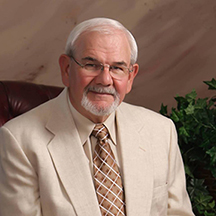
Rev. Don Campbell
Deuteronomy 17-20
THOUGHT FOR TODAY, March 17, 2019
“THE KING AS SCHOLAR”
Although it was not God’s will that Israel have a king other than himself (1 Samuel 8:1-9), he knew that they would ask for one, so he gave instructions as to the kind of man they were to appoint: He must be one of their fellow Israelites. He was not to cause the people to return to Egypt to acquire horses. He was not to multiple wives for himself. He was not to acquire excessive silver and gold (Deuteronomy 17:14-17).
1 Samuel 8, King James Version
To the future kings, Moses wrote: “And when he sits on the throne of his kingdom, he shall write for himself in a book a copy of this law, approved by the Levitical priests. And it shall be with him, and he shall read in it all the days of his life, that he may learn to fear the Lord his God by keeping all the words of this law and these statutes, and doing them, that his heart may not be lifted up above his brothers, and that he may not turn aside from the commandment, either to the right hand or to the left, so that he may continue long in his kingdom, he and his children, in Israel” (Deuteronomy 17:18-20).
Note that the king was not just supposed to own a copy of the law, he was, himself, to make a copy of it. Unless we are one of those rare individuals who has a photographic memory, writing things down enhances our ability to remember. But the king was not just to copy the law and read it, he was to keep the laws and statutes. Few if any of the kings followed this commandment, as manifested in their bad behavior.
As royalty (1 Peter 2:9), we should all be scholars in the sense of being a people of the Book. While there is nothing inherently wrong with the best and brightest pursuing degrees of higher learning from schools of theology, by whatever name we may call them, there is an ever-present danger of our becoming a people of the pulpit instead of a people of the Book.
In the early days of the church, the clergy and the laity were the same people. The Greek form of the word “clergy” is “kleros,” and is found in 1 Peter 5:3: “Neither as being lords over God’s heritage, but being examples to the flock” (KJV). The Greek form of the word “laity” is “laos,” meaning people. In 1 Peter 2:9, Peter declares that we are a people for God’s own possession.
In saying that all believers are clergy, we must not fall into a trap of spiritual anarchism like that in the days of the judges: “In those days there was no king in Israel. Everyone did what was right in his own eyes” (Judges 21:25). The church if a spiritual body, with many members and the little toe, is as valuable in the sight of God as is the most eloquent tongue (1 Corinthians 12:12-26). Be this as it may, God appointed leaders in the body: “first apostles, second prophets, third teachers” (Corinthians 28). The apostles had no successors and there are not inspired prophets today. However, there must be leaders: “Obey your spiritual leaders, and do what they say. Their work is to watch over your souls, and they are accountable to God. Give them reason to do this with joy and not with sorrow. That would certainly not be for your benefit” (Hebrews 13:17, NLT).
CONNECTIONS Romans 12:3-8, Romans 12:12-31
1. In architecture, as well as many other fields, there is the paradigm which says, “Form follows function.” Paul discusses form and function in Romans 12:3-8. We don’t all have the same form or function, but what does he tell each to do, regardless of our form and function? (Romans 6)
2. To modernist architects (after 1930), the battle cry has been that the decorative elements, which they call “ornament”, were superfluous. How do Paul’s words in Romans 12:12-31 show that in the body of Christ there are no ornamental members, but all have a form dictated by their function?
