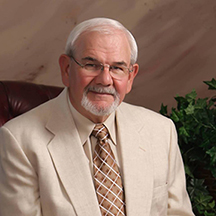
Rev. Don Campbell
Deuteronomy 30-31
THOUGHT FOR TODAY, March 21, 2019
“THE MERCIFUL GOD”
The curses of which Moses warned the people sound harsh and the commandments impossible to keep. However, Moses wrote: “For this commandment that I command you today is not too hard for you, neither is it far off. It is not in heaven, that you should say, ‘Who will ascend to heaven for us and bring it to us, that we may hear it and do it?’ Neither is it beyond the sea, that you should say, ‘Who will go over the sea for us and bring it to us, that we may hear it and do it?’ But the word is very near you. It is in your mouth and in your heart, so that you can do it” (Deuteronomy 30:11-14). Paul quotes this passage and says that the meaning of “in your mouth and heart” refers to faith in one’s heart. The problem was that they did not follow the path of faith, but of works: “For I bear them witness that they have a zeal for God, but not according to knowledge. For being ignorant of the righteousness of God, and seeking to establish their own, they did not submit to God’s righteousness” (Romans 10:2-3). Recall that Moses told them that they were not to think that it was because of their righteousness that God was giving them the promised land (Deuteronomy 9:4-6). The blessings and curses were not designed to provide them with a method of salvation by works, but to draw them to the God of mercy.
God had provided daily, monthly, quarterly and annual sacrifices for sin, but they took those as sacraments, which impart grace without faith. God would speak through Isaiah:
“What makes you think I want all your sacrifices?”
says the Lord.
“I am sick of your burnt offerings of rams
and the fat of fattened cattle.
I get no pleasure from the blood
of bulls and lambs and goats.
When you come to worship me,
who asked you to parade through my courts with all your ceremony?
Stop bringing me your meaningless gifts;
the incense of your offerings disgusts me!
As for your celebrations of the new moon and the Sabbath
and your special days for fasting—
they are all sinful and false.
I want no more of your pious meetings.
I hate your new moon celebrations and your annual festivals.
They are a burden to me. I cannot stand them!
When you lift up your hands in prayer, I will not look.
Though you offer many prayers, I will not listen,
for your hands are covered with the blood of innocent victims.
Wash yourselves and be clean!
Get your sins out of my sight.
Give up your evil ways.
Learn to do good.
Seek justice.
Help the oppressed.
Defend the cause of orphans.
Fight for the rights of widows.
“Come now, let’s settle this,”
says the Lord.
“Though your sins are like scarlet,
I will make them as white as snow.
Though they are red like crimson,
I will make them as white as wool.
If you will only obey me,
you will have plenty to eat.
But if you turn away and refuse to listen,
you will be devoured by the sword of your enemies.
I, the Lord, have spoken!” (Isaiah 1:11-20, NLT)
There were some who sought the mercy of God by faith, as the Hebrew writer affirms: “And what more shall I say? For time would fail me to tell of Gideon, Barak, Samson, Jephthah, of David and Samuel and the prophets— who through faith conquered kingdoms, enforced justice, obtained promises, stopped the mouths of lions, quenched the power of fire, escaped the edge of the sword, were made strong out of weakness, became mighty in war, put foreign armies to flight. Women received back their dead by resurrection. Some were tortured, refusing to accept release, so that they might rise again to a better life. Others suffered mocking and flogging, and even chains and imprisonment. They were stoned, they were sawn in two, they were killed with the sword. They went about in skins of sheep and goats, destitute, afflicted, mistreated— of whom the world was not worthy—wandering about in deserts and mountains, and in dens and caves of the earth. And all these, though commended through their faith, did not receive what was promised, since God had provided something better for us, that apart from us they should not be made perfect” (Hebrews 11:32-40).
As in the days of Elijah, God always had his remnant of faithful servants who knew it was by the grace of a merciful God that they lived (Romans 11:1-6).
CONNECTIONS – Colossians 2:11-14, Romans 2:25-29
1. In the N.T. baptism is not our gift to God, but God’s gift of grace to us, which we access by faith (Colossians 2:11-14). How can we turn it into a repugnant act as the Jews had turned circumcision and sacrifice into repugnant acts? (Compare Romans 2:25-29).
2. The Lord’s Supper is not a sacrament either, but an ordinance designed to give us an opportunity to proclaim our faith in the Lord’s gracious death on our behalf (1 Corinthians 11:23-26). What could cause God to say, “I’m sick of your bread and juice!”?
