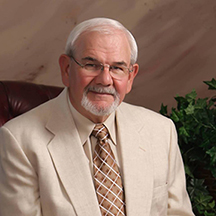
Rev. Don Campbell
Psalms 25, 29, 33, 36, 39
THOUGHT FOR TODAY, May 8, 2019
“SONGS FOR ALL OCCASIONS”
The songs we sing reflect our feelings and thoughts, our hopes and our fears, our doubts and our dreams. In other words, songs can touch us from the center to the circumference of our being. Whatever we sing, we should sing with the firm conviction that God hears and responses to our songs as surely as to our prayers.
In Psalm 25, David focuses on God’s paths: “Make me know your ways,” Teach me your paths,” Lead me in your truth.” All God’s paths are steadfast love and faithfulness for those who keep his covenant and his testimony.
In Psalm 29, David focuses on the voice of God in nature. He begins with the universe to praise the God of glory and strength. Seven times David ascribes power to God’s voice from the rolling thunder to hidden birth of the deer in the forest.
In Psalm 33, the psalmist speaks of God’s providential power both in the affairs of nations and of individuals. He sees the arrogance of the mighty and the humility of those who fear him.
In Psalm 36, there is a contrast between those who flatter themselves in their own eyes and those who recognize their dependence on the steadfast love of God.
In Psalm 39, David underscores the brevity of life, saying, for example, “Behold, you have made my days a few handbreadths, and my lifetime is nothing before you. Surely all mankind stands as a mere breath! Surely a man goes about as a shadow” (vv.5-6).
The songs that we sing in worship and hum as we go about our day are a reflection of our hopes and fears, but no matter what our mood, the mighty, loving God who made us and knows us better than we know ourselves should always be the in the background if not the foreground of our singing—and humming.
CONNECTIONS
1. How do Paul’s instructions in Ephesians 5:15-21 and Colossians 3:15-17 teach us that there should be a “one-another” aspect to our singing as well as “Thou” aspect?
2. How many times does Paul use the words “giving thanks” or “thankfulness” in these two passages? What does this suggest to us about the focus not only of our songs but our lives?
